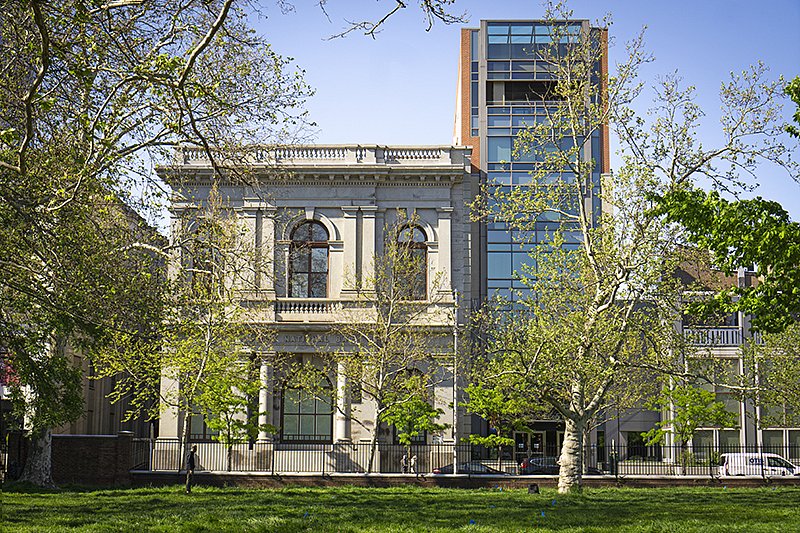
We are all different
We are all different which is great because we are all unique.
Without diversity, life would be very boring. (Catherine Pulsifer)

We are all different which is great because we are all unique.
Without diversity, life would be very boring. (Catherine Pulsifer)
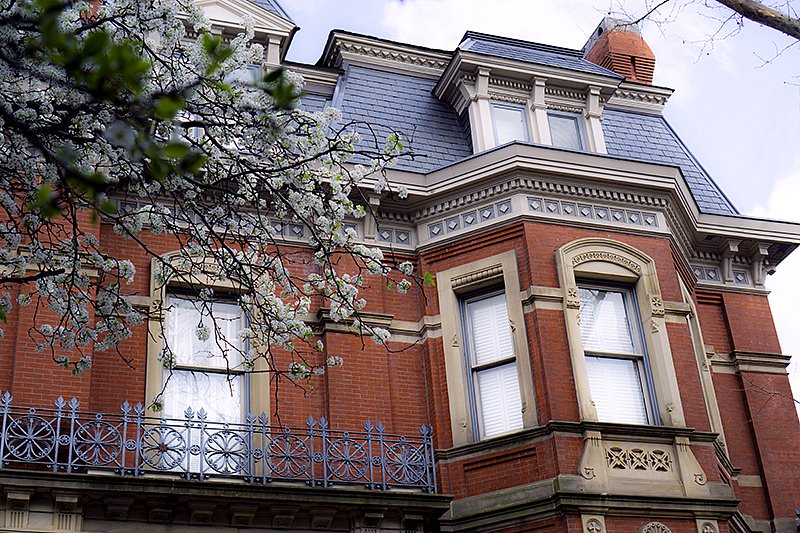
All I can ever ask of you is
to stay......
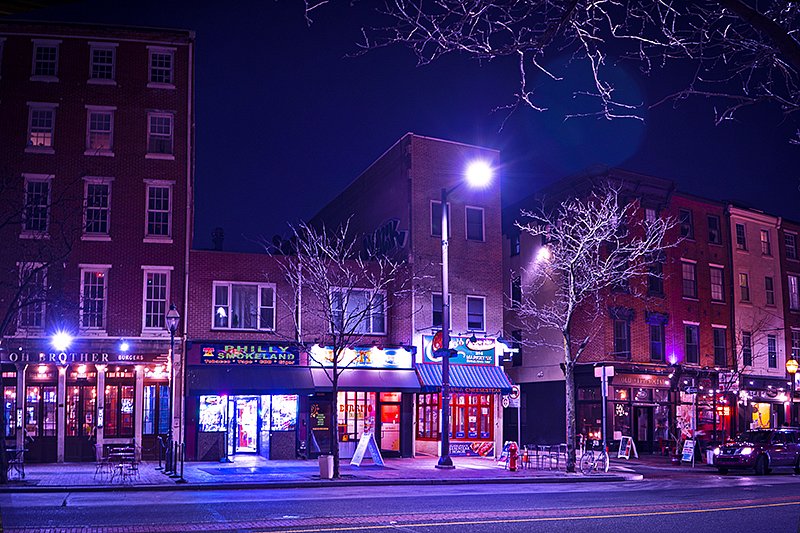
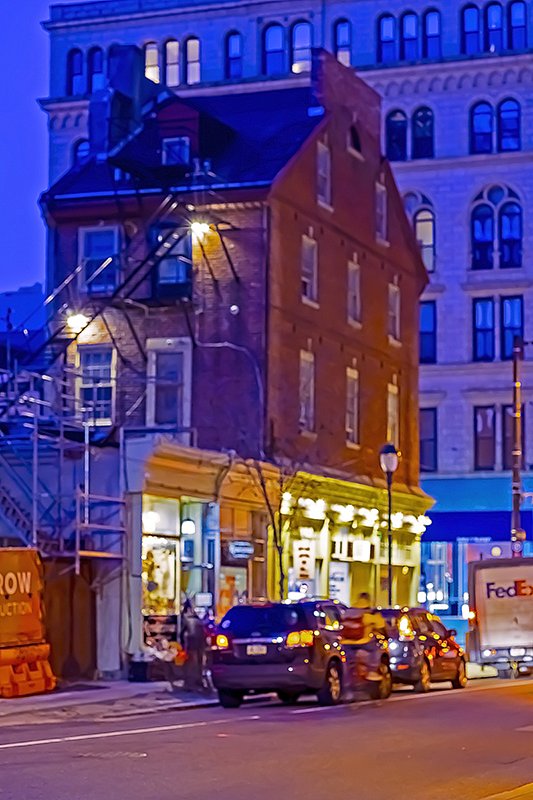
The city looks even prettier at night

Spring has sprung

Tulip season is here...

Constructed in 1907 by the estate of philanthropist and banker, Stephen Girard, the Lafayette Building was designed by noted architect, James Windrim and named for the Marquis de Lafayette. The rehabilitation transformed the vacant office building into a Kimpton Hotel Monaco. Located across from Independence Hall, the rooms overlook the adjacent mall and the rooftop bar and lounge incorporate original rooftop pavilions and provide a unique outdoor experience.

Independence Hall touts a red brick facade, designed in Georgian style. It consists of a central building with belltower and steeple, attached to two smaller wings via arcaded hyphens. The highest point to the tip of the steeple spire is 168 feet 7 1⁄4 inches (51.391 m) above the ground.
The State House was built between 1732 and 1753, designed by Edmund Woolley and Andrew Hamilton, and built by Woolley. Its construction was commissioned by the Pennsylvania colonial legislature which paid for construction as funds were available, so it was finished piecemeal. It was initially inhabited by the colonial government of Pennsylvania as its State House, from 1732 to 1799.
In 1752, when Isaac Norris was selecting a man to build the first clock for the State House, today known as Independence Hall, he chose Thomas Stretch, the son of Peter Stretch his old friend and fellow council member, to do the job. In 1753 Stretch erected a giant clock at the building's west end that resembled a tall clock (grandfather clock). The 40-foot-tall (12 m) limestone base was capped with a 14-foot (4.3 m) wooden case surrounding the clock's face, which was carved by Samuel Harding. The giant clock was removed about 1830. The clock's dials were mounted at the east and west ends of the main building connected by rods to the clock movement in the middle of the building. A new clock was designed and installed by Isaiah Lukens in 1828. The Lukens clock ran consecutively for eight days, "with four copper dials on each side that measured eight feet in diameter and clockworks that ensured sufficient power to strike the four-thousand pound bell made by John Wilbank." The Lukens clock remained in Independence Hall until 1877.
The acquisition of the original clock and bell by the Pennsylvania Colonial Assembly is closely related to the acquisition of the Liberty Bell. By mid-1753, the clock had been installed in the State House attic, but six years were to elapse before Thomas Stretch received any pay for it. (wwikipedia)

The plans for these gates were actually approved all the way back in 2001, when City Hall’s exterior was in the midst of a huge renovation. The gate’s design was drawn up by the architecture firm Vitetta, but they’re based on sketches made by John McArthur Jr., the original architect of City Hall

Witherspoon Building is a historic office building located in the Market East neighborhood of Philadelphia, Pennsylvania. It was designed by architect Joseph M. Huston (1866–1940) and built between 1895 and 1897. It was built for the Presbyterian Board of Publications and Sabbath School Work. It is an 11-story, steel frame "E"-shaped building, faced with brick and granite. It has terra cotta decorative elements. Its exterior features Corinthian order and Ionic order columns, statues, medallions, seals of various boards and agencies of the Presbyterian Church and of related Reformed churches. It is named for John Witherspoon (1723–1794), a president of Princeton University.
It was added to the National Register of Historic Places in 1978. (wikipedia)

In 1876, Philadelphia enacted the first municipal fire escape law in the United States. This ordinance had been proposed by the chief engineer of Philadelphia’s newly organized, paid fire department, partly in anticipation of the crowds expected to attend the Centennial Exhibition but mainly because of deadly fires in factories. The law created a Board of Fire Escapes, which could order the construction of fire escapes on any building, in whatever form the board believed best. Significantly, the law applied to existing buildings as well as new construction, and by specifying that fire escapes be “erected,” assumed these would be structures in or on buildings.
Soon thereafter, in 1879, Pennsylvania’s legislature passed a fire escape law. Like the Philadelphia law, the state act specified that fire escapes be “permanent,” and now they also had to be “external.” It obliged not only building owners, but also building managers, to put in the fire escapes. The law was ineffective, however. It gave no guidance on what a fire escape should be like, apart from being permanent and external. Moreover, the legislature provided no resources, no state officers, and no funds to enforce the act.
Philadelphia’s City Councils took the occasion of this law to discontinue funding for the Fire Escape Board, thereby allowing the city’s ordinance to lapse. Without any enforcement, few building owners voluntarily complied with either law. For example, five years after the ordinance passed, and two after the state law, few factories in Philadelphia had fire escapes.
(philadelphiaencyclopedia.org)

A fire escape is a special kind of emergency exit, usually mounted to the outside of a building or occasionally inside but separate from the main areas of the building. It provides a method of escape in the event of a fire or other emergency that makes the stairwells inside a building inaccessible. Fire escapes are most often found on multiple-story residential buildings, such as apartment buildings. At one time, they were a very important aspect of fire safety for all new construction in urban areas; more recently, however, they have fallen out of common use. This is due to the improved building codes incorporating fire detectors, technologically advanced fire fighting equipment, which includes better communications and the reach of fire fighting ladder trucks, and more importantly fire sprinklers. The international building codes and other authoritative agencies have incorporated fire sprinklers into multi-story buildings below 15 storeys and not just skyscrapers.
A fire escape consists of a number of horizontal platforms, one at each story of a building, with ladders or stairs connecting them. The platform and stairs are usually open steel gratings, to prevent the build-up of ice, snow, and leaves. Railings are usually provided on each of the levels, but as fire escapes are designed for emergency use only, these railings often do not need to meet the same standards as railings in other contexts. The ladder from the lowest level of the fire escape to the ground may be fixed, but more commonly it swings down on a hinge or slides down along a track. The moveable designs allow occupants to safely reach the ground in the event of a fire but prevent people from accessing the fire escape from the ground at other times (such as to perpetrate a burglary or vandalism). Lower part of a fire escape in New York.
Exit from the interior of a building to the fire escape may be provided by a fire exit door, but in most cases the only exit is through a window. When there is a door, it is often fitted with a fire alarm to prevent other uses of the fire escape, and to prevent unauthorized entry. As many fire escapes were built before the advent of electronic fire alarms, fire escapes in older buildings have often needed to be retrofitted with alarms for this purpose (wikipedia)

Ringgold Place House or known as the 1900 block of Waverly Street is comprised of 16 rowhomes, each 14 feet wide by 20 feet deep, with the 9-step front stoops accommodating a raised basement kitchen at street level. Waverly is barely the width of a sedan, with no street parking. When these properties were built in 1862, the street was called Ringgold Place, after Colonel Samuel Ringgold. Stone inlays bearing that name can still be seen on the corner properties(reading, “The Ringgold Place Houses (Built 1862) have been registered on the National Register of Historic Places.”). Construction during the Civil War era necessitated the small size and simple design of the houses, due to the scarcity of materials in wartime.
The small size was also due to their original use as workers’ housing, likely for the Berkshire Cotton Mill located on the next block at 20th Street and Ringgold Place. While 1,000 square feet may seem petite for one family, it is possible that multiple families may have occupied each rowhouse on Ringgold Place! The multiple door (basement and first floor) entries lend themselves to subdivision, and the tendency at the time was to squeeze workers into small quarters and to make the most out of existing housing stock. By 1895 the Berkshire Mills was closed, and the homes promptly transformed into more fashionable abodes, largely encouraged by the growing influence of Rittenhouse Square.
In 1925, architect George Howe purchased the block, and proceeded to update the properties, clean the facades, and added some decorative elements. The corner property of 1900 Waverly served as his office while working on his acclaimed PSFS building. He sold the homes in 1934.
Ringgold Place formally changed to Waverly Street sometime between 1895-1942, and the block was added National Register of Historic Places in 1983. (solorealty)

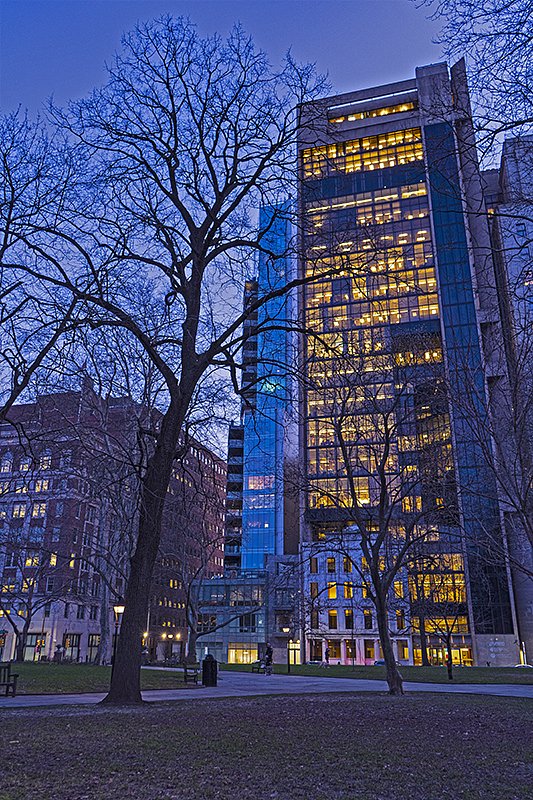
The St. James is a luxury residential skyscraper in Washington Square West, Philadelphia, Pennsylvania, United States. The 498 feet (152 m), 45-story high-rise stands along Walnut Street and Washington Square and is the 15th tallest building in Philadelphia.
The Chicago-style, was designed by Solomon Cordwell Buenz & Associates Inc. with assistance by architectural firm Bower Lewis Thrower. The glass and concrete skyscraper's east and west facade is split between a curved wall, a squared-off wing, and a strip of blue glass that separates them. These buildings included three Federal-style rowhouses built in 1807 called York Row and the Italianate-style former headquarters of the Philadelphia Savings Fund Society, built in 1868–1869. After lying vacant and neglected for years, the only part of York Row preserved were the rowhouses' facades. Only a back portion of the Philadelphia Savings Fund Society building was demolished, the rest being incorporated as retail and office space.
Developer P&A Associates first attempted to develop the site in 1995, but was delayed because of a lack of investor confidence in the project. When the Philadelphia residential market improved in the late 1990s, St. James Associates Joint Venture, a joint venture of P&A Associates and others, began construction in November 2001. The high-rise building, completed in 2004, features 306 units, with each but the studio apartments having a private balcony. Its amenities include a 60 feet (18 m) swimming pool, a private courtyard, and a nine-story parking garage that makes up the base of the building.
The St. James has won several awards, including the 2006 National Association of Home Builders awards for Best Luxury Rental Apartment Primary Market and Best High-Rise Rental Apartment (Wikipedia)

In 1889, the Philadelphia and Reading Railway decided to build a train depot, passenger station, and company headquarters on the corner of 12th and Market Streets. The move came eight years after the Pennsylvania Railroad opened its Broad Street Station several blocks away at 15th and Market Streets, and one year after the Baltimore and Ohio Railroad opened its 24th Street Station at 24th and Chestnut Streets.
ARCHITECTURE:
The headhouse was designed in 1891 by Francis H. Kimball, and the train shed by Wilson Brothers & Company. Construction began that same year, and the station opened on January 29, 1893. At the time, the trainshed was one of the largest single-span arched-roof structures in the world. The following year, the Wilson Brothers would build an even larger trainshed three blocks away, for the Pennsylvania Railroad's Broad Street Station. The Reading's trainshed is now the only such structure left in the United States.
The complex was fronted on Market by an eight-story headhouse that housed the passenger station and company headquarters. Built in the Italian Renaissance style, the headhouse has brick bearing walls with cast-iron columns and timber floors. Interior finishes include molded ornamental plaster and marble with cast-iron detailing.
This station was placed on the National Register of Historic Places in 1972 and was declared a National Historic Landmark in 1976.
Now the remaining space on the concourse levels of the headhouse became retail space. The former Reading Railroad offices on the headhouse's upper floors were converted to meeting and ballroom facilities. It also contains more than 200 rooms for the adjacent Marriott Hotel, to which it is connected by a skywalk and for which it serves as a secondary entrance. (wikipedia)

The tallest building on back is Comcast Center Building. In front of it are Suburban Station (left) and Phoenix Luxury Condominium right)
SUBURBAN STATION ===================
Suburban Station is an art deco office building and underground commuter rail station in Penn Center, Philadelphia. Its official SEPTA address is 16th Street and JFK Boulevard. The station is owned and operated by SEPTA and is one of the three core Center City stations on SEPTA Regional Rail. The station was built by the Pennsylvania Railroad to replace the original Broad Street Station and opened on September 28, 1930. The Comcast Center, situated on the north half of its block near Arch Street, adds a "winter garden" on the south side, which serves as a new back entrance to the station, with the commuter rail tracks about 50 feet below street level. .
PHOENIX LUXURY CONDO ===============
Built in 1925, The Phoenix condo is the former headquarters of the Insurance Company of North America (INA), for many years the oldest shareholder-owned insurance company in the nation.
Built in 1925, The Phoenix condo is the former headquarters of the Insurance Company of North America (INA), for many years the oldest shareholder-owned insurance company in the nation.
Awarded National Historic Landmark status, The Phoenix, in its new incarnation, retains opulent details that have graced the structure since its inception—coffered ceilings, Kasota and Carrera marble floors and walls, ornate bronze paneled elevators, and elaborate mill and plaster work. Every care was taken to preserve the historic details of the Georgian Revival Tower while designing and constructing the building with the most modern technologies and amenities available. The coalescence of old-fashioned craftsmanship and contemporary design gives The Phoenix an elegance rarely seen in modern construction. The Phoenix underwent a major renovation in 2002. Every care was taken to preserve the architectural beauty of the Georgian Revival Tower while providing a “new” building with the latest of technologies and energy efficiency
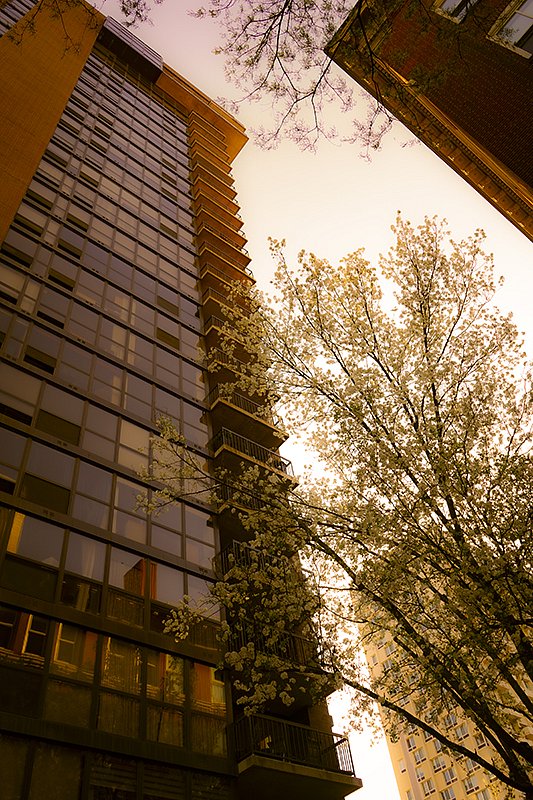
Kiss me in the same way
The red sun, kisses the sky
Beautifully
Magically
Soft
Melt me away, Into the dark
(Clairel Estevez)
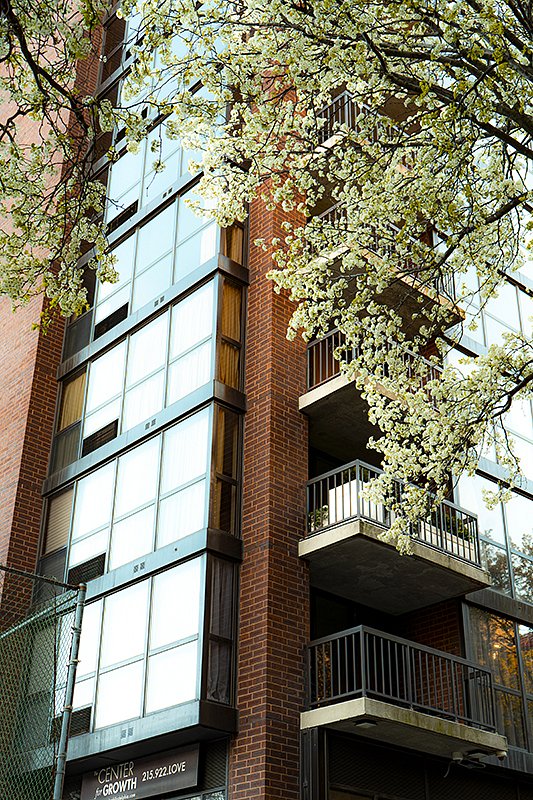
Love is like wild flowers. It's often found in the most unlikely places -anonymous
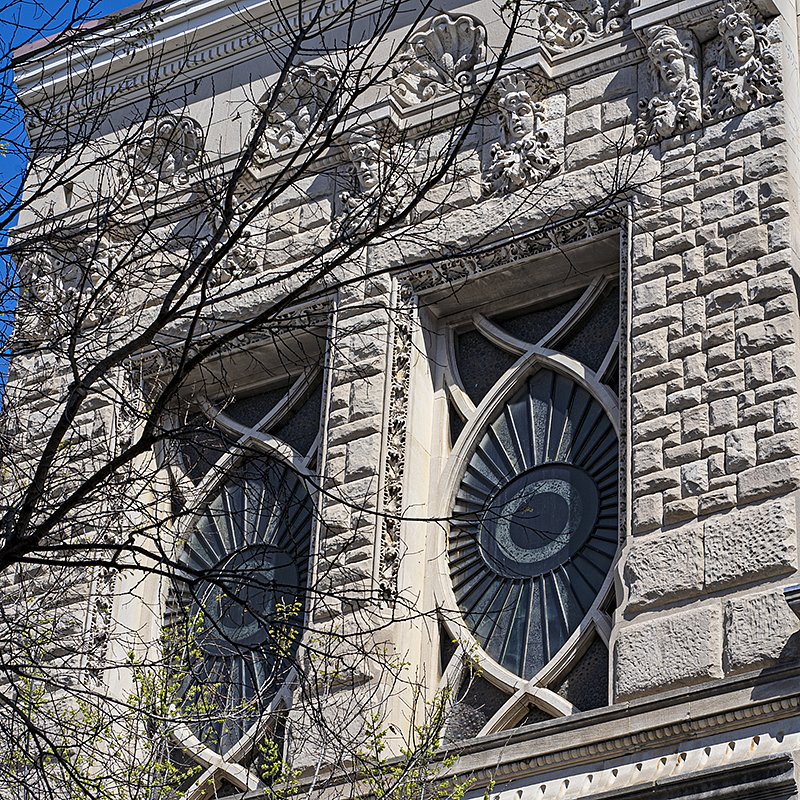
It's less what the eye sees and more what the soul feels

– Natural light is admitted through the clerestory windows close to the ceiling. These are of lightly tinted glass and carry simple religious symbols (IHS (Christ), three lilies representing the Trinity, a key (Saint Peter), a cross, a crown of thorns, a sword and scripture (Saint Paul)) as their most prominent decorations. Gold rosettes on a rich blue background adorn the coffered ceiling. Bronze chandeliers, weighing a half ton each, light the nave. (cathedralphila.org)

It seems that the Cathedral of Saints Peter & Paul was, from the outset, intended to be of Neo-Classical design, with that architectural style’s barrel arches, Corinthian columns, and triangular pediments supported by columns at the entrances. Yet the placement of the windows at only the clerestory level is in strong contrast to the Baltimore Cathedral – also of Neo-Classical design – and most likely the result of concern over potential anti-Catholic violence.
LeBrun’s design for the Cathedral was modeled after the Lombard Church of Saint Charles (San Carlo al Corso) in Rome in the Neo-Classical style of the Italian Renaissance. Like so many churches and cathedrals in Europe, it would have a cruciform floorplan. It was constructed of Connecticut and New Jersey brownstone and is topped by a great copper dome which has acquired a green patina. Though never built, a bell tower was envisioned for the northeast corner and there were several other modifications to the original design over the course of construction. The gilded surfaces and detailed sculptural elements, along with the choice of rich finishes of marble and walnut, give this relatively young cathedral a distinct sense of timelessness. The interior decorations are largely the work of Constantino Brumidi (1805-1880). Brumidi also painted the Capitol in Washington, DC.
Another details:
Foundation walls from 5 to 10 feet thick
Walls of the building are 4 feet 6 inches thick
The structure measures approximately 300 feet in length, 136 feet in width, and 101 feet 6 inches in height from the pavement to the apex of the pediment
The dome rises over 60 feet, is 71 feet in diameter at the base, and rises 156 feet 8 inches above the floor of the Cathedral
The total height of the Cathedral is 209 feet to the top of the 11-foot gold cross
The ball under the gold cross is 6 feet 8 inches in diameter
The current sanctuary is 91 feet deep
The great nave is 50 feet wide and 236 feet long
The vaulted ceiling is 80 feet above the floor
The canopy over the altar is 38 feet high
The walnut pews seat over 1,000 people, with capacity for almost 1500 by the use of temporary chairs.
The confessionals are walnut-stained oak; their privacy is secured by red velvet curtains.
Six Verte lmperial marble columns, rising 40 feet high and weighing in excess of twenty-five tons each, are set into the curved wall of the apse.
The canopy or baldachin over the altar is of antique Italian marble. lt stands 38 feet high and is surmounted by a semi-circular dome of bronze panels.
The floor is of white and dark green marble tiles over an inch thick. A white marble altar rail with three bronze gates separates the nave and transept from the sanctuary.
The facade of the Cathedral is graced by four massive stone columns of the Corinthian order, over 60 feet high and 6 feet in diameter.
(cathedralphila.org)

Independence Hall is the building where both the United States Declaration of Independence and the United States Constitution were debated and adopted. It is now the centerpiece of the Independence National Historical Park in Philadelphia, Pennsylvania.
The building was completed in 1753 as the Pennsylvania State House, and served as the capitol for the Province and Commonwealth of Pennsylvania until the state capital moved to Lancaster in 1799. It became the principal meeting place of the Second Continental Congress from 1775 to 1783 and was the site of the Constitutional Convention in the summer of 1787.
A convention held in Independence Hall in 1915, presided over by former US president William Howard Taft, marked the formal announcement of the formation of the League to Enforce Peace, which led to the League of Nations and eventually the United Nations. The building is part of Independence National Historical Park and is listed as a World Heritage Site.

Friday, October 23rd, 2020 - A sea of more than 860 white chairs sat empty on Independence Mall for eight hours. Each one symbolizing 10 people who’ve died from COVID-19 in Pennsylvania this year and will never sit with their loved ones again ( Philadelphia Inquirer)

The cathedral church (Cathedral Basilica of Saints Peter and Paul) is the principal church of the diocese, because it is here that the bishop as local ordinary of the diocese has his throne (chair), called the cathedra. Open since 1864 and located at the East side of Logan Square on 18th Street and the Benjamin Franklin Parkway, the cathedral is the mother church of the Archdiocese of Philadelphia. It is the largest brownstone structure in Philadelphia and the largest Catholic Church in Pennsylvania. The history of the Cathedral Basilica of Saints Peter and Paul is central to the history of the Archdiocese of Philadelphia. (catedralphila.org)

Pennsylvania Hospital is a private, non-profit, 515-bed teaching hospital located in Center City Philadelphia and is part of the University of Pennsylvania Health System. Founded on May 11, 1751, by Benjamin Franklin and Dr. Thomas Bond, Pennsylvania Hospital is one of the earliest established public hospitals in the United States. It is also home to America's first surgical amphitheatre and its first medical library. The hospital's main building, dating to 1756, is a National Historic Landmark.
The seal of the hospital, chosen by Franklin and Bond, incorporates the story of the Good Samaritan; the phrase "Take Care of Him and I will repay Thee" is used on it.
Built : December 17, 1756
Architect : Samuel Rhoads
Architectural style : Colonial and Federal (Pine Building)
(wikipedia)

The Cathedral Basilica of Saints Peter and Paul, head church of the Roman Catholic Archdiocese of Philadelphia, It was built between 1846 and 1864, and was designed by Napoleon LeBrun, from original plans by the Reverend Mariano Muller and the Reverend John B. Tornatore, with the dome and Palladian facade, designed by John Notman, added after 1850.[2] The interior was largely decorated by Constantino Brumidi. With its grand façade, vaulted dome, ornate main altar, eight side chapels and main sanctuary that comfortably holds 2,000 worshippers, the Cathedral Basilica of Saints Peter and Paul is the largest brownstone structure and one of the most architecturally notable structures in the city of Philadelphia.
The cathedral, presented in a Roman-Corinthian style of architecture, is modeled after the Lombard Church of St. Charles (San Carlo al Corso) in Rome. Its Palladian façade and aqua oxidized-copper dome are in the Italian Renaissance manner, as is the spacious interior, which features an oversized apse of stained glass and red antique marble in proportions reminiscent of Roman churches. A baldachin (canopy) over the main altar and the three altars on each of the side aisles point up this Italian Renaissance flavor. In the bowels of the building is the compact "Crypt of the Bishops".

The building was designed by the architectural firm of Hoxie & Button, and built in 1855. It is a one-story. The architecture is neo-classic Greek revival style, a contrast to the modern Comcast Center skyscraper next door. The interior features ornate columns, a domed ceiling, and a massive organ. . It features a portico supported by four Corinthian order columns and a coffered dome.
It was added to the National Register of Historic Places in 1971

Located in the historic Reading terminal train station, Hard Rock Cafe was established on January 15th, 1998
Not much have we known about this cafe in Philadelphia, but we know about one thing.
HRC is known for its collection of rock-and-roll memorabilia. The cafes solicit donations of music memorabilia but also purchase a number of items at auctions around the world, including autographed guitars, costumes from world tours and rare photographs; these are often to be found mounted on cafe walls. The collection began in 1979 with an un-signed Red Fender Lead II guitar from Eric Clapton, who was a regular at the first restaurant in London. Clapton wanted management to hang the guitar over his regular seat in order to lay claim to that spot, and they obliged.
CONCEPT DESIGN
The first thing a memorabilia designer takes into consideration when planning a new location is just that: the location. Then the designer is pulling inspiration from that location/city, from its traditions and its musicians. The next thing is look at the space, the layout of the property and the individual rooms, halls, and spaces within the Cafe or Hotel. Starting with the larger pieces (instruments and clothing) of memorabilia that will be going into the location, the designer will think about the flow and the feel of each piece relative to pieces near it. This relativity could be the similarities in the pieces (two stage costumes, for example) or music styles of the musicians represented or the cities from which the musicians hail. After the “big” pieces are set, designer starts to adding letters, photos, concert posters, and gold records to the mix, to tell the story of that property. Once the placement of every piece is set, it is time for framing. Once there, it can take anywhere from 4-6 weeks for the memorabilia to be framed, then sent back to Hard Rock and readied for their final shipment to the Cafe or Hotel. From there, the designer travels to the property and works with installers to realize his initial design and get everything set. It doesn’t always run smoothly, but everyone rolls with the punches and is always prepared for unexpected circumstances, whether its a TV placed where it wasn’t expected or a large empty space on a wall that wasn’t included in the initial designs. It usually takes anywhere from 9-14 weeks on a single property.
(Hradrock Cafe.com, wikipedia)

The creation of Chestnut Walk, a meandering mid-block promenade stretching from Market Street and eventually through to Chestnut Street, open up the interior of the site to the public. Seldom used Ludlow Street and Clover Street are opened up to one-way vehicular traffic as cobblestone streets and life will be brought back to the center of what was a super block.
This open space is filled with mix of restaurants with lively outdoor dining, retails and office space. This walk was part of East Market Development.
(phillymag)

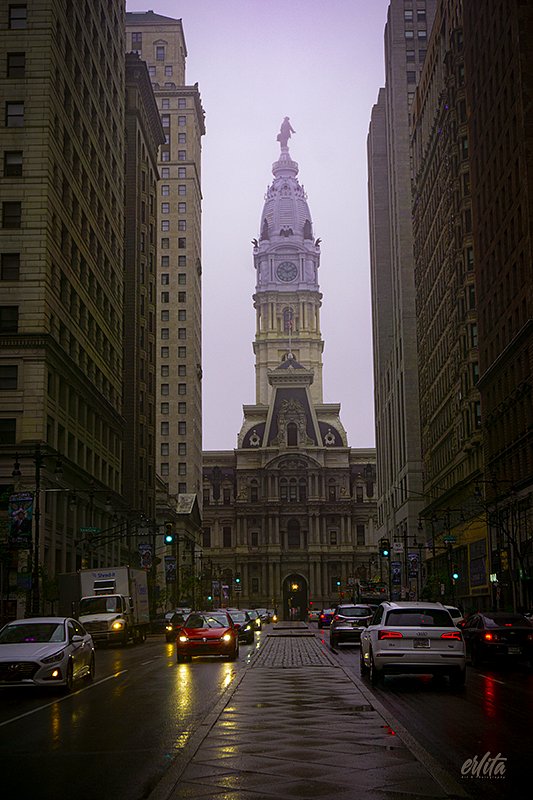
The City hall of Philadelphia is always be the center of the heart of the city. All the skyscraper buildings are surrounding this area, All the activities are here all year around, either it is a parade, outdoor activities like marathon, outdoor "zumba" workout, ice skating, or entertainment like light show, christmas village, up to protest activities.

The Comcast Technology Center (covered by the tree on the left )is 60-floor building, with a height of 1,121 feet (342 m), and is the tallest building in Philadelphia and the Commonwealth of Pennsylvania, the tenth-tallest building in the United States and the tallest outside Manhattan and Chicago. The tower is located one block away from the Comcast Center ( the third from left), the headquarters of Comcast Corporation.
The middle is One Liberty Place which was Philadelphia's first skyscraper, now is the third tallest building
Next to this building on the right is Two Liberty Place holds the fourth place.

Library Hall, at 105 South 5th Street is a 1959 reconstruction of the 1790 building originally built for the Library Company of Philadelphia. It is now occupied by the library of the American Philosophical Society.
Founded by Benjamin Franklin in 1743, the Philosophical Society's library contains an unrivaled collection of Franklin's books and papers as well as those of other great scientists from then until now.
Built: 1789
Reconstructed: 1954
Original architect: William Thornton
WHAT'S INSIDE:
The original journals of the Lewis and Clark expedition,
A copy of the Declaration of Independence in Jefferson's own handwriting,
A first edition of Sir Isaac Newton's Principia,
A first edition of Charles Darwin's Origin of Species

Located at on the northeast corner of 4th and Walnut Streets, the Todd House was built in 1775. It was occupied from 1791 -1793 by lawyer John Todd, and his wife Dolley Payne. Todd died during the 1793 yellow fever epidemic. Following her husband's death, Dolley married James Madison, later to become the fourth President of the United States. Dolley went on to serve as a de facto first lady for the widowed Thomas Jefferson in 1801, and as first lady during Madison's two terms... The Todd House reflects the lifestyle of 18th century Philadelphia's middle class.
Style : 18th century Georgian Built: 1775 Architect : Carpenters' Company member

FMC Tower is a 49-story, 730-foot tall, luxury, mixed-use skyscraper designed by Master Architect César Pelli that combines iconic architecture with the latest in advanced engineering and LEED - based sustainable design. The tower contains 622,000 square feet of trophy office space with 10 ’ ceilings and efficient floor plates enabling collaborative, light-filled workspaces
Location: 2929 Walnut st.

Have we ever been wondering about, why the top of City Hall - a 200-foot metal structure atop a 347-foot stone edifice -“is a completely different shade of white than the rest of the building? Was it an oversight during a renovation project or is there a technical reason?” Actually, the answer to both questions is yes. Renovation required a change in materials used for the City Hall tower’s skin, but the designers of City Hall never meant the fact to be quite so noticeable. The work on the tower, from the clock level up to the observation deck was covered with cast iron, was planned to replace some of the [nearly] 4,000 iron plates, but instead, it replaced almost all of them with a new skin of steel. Most of the 3,900 iron plates were replaced with about 2,000 copper-and-zinc-coated plates. The redesign with fewer plates was intentional; there would be fewer niches and spaces where rainwater could accumulate and cause corrosion. The plates were electroplated and were to be covered with a state-of-the-art paint that would last 50 years or more, the kind of hardy, nearly indestructible paint used for bridges, ships, and airplanes. The thing is, the company that developed the paint made it in just three colors: white, dark gray, and light gray. Officials of the city’s Art Commission chose the light-gray hue and thought about “warming up the color" to match the stone of the main building. But they could not find a way to do it. So the light-gray paint went on the copper plates before being topped on the refurbished tower. It had taken six years (1984 – 1990) and $26.5 million to refurbish Philadelphia’s City Hall tower.


"%3EFire escape Detail ( Delong Building )%3C/a%3E%3C/strong%3E%3C/p%3E%3Cp%3EIn+1876%2C+Philadelphia+enacted+the+first+municipal+fire+escape+law+in+the+United+States.+This+ordinance+had+been+proposed+by+the+chief+engineer+of+Philadelphia%E2%80%99s+newly+organized%2C+paid+fire+department%2C+partly+in+anticipation+of+the+crowds+expected+to+attend+the+Centennial+Exhibition+but+mainly+because+of+deadly+fires+in+factories.+The+law+created+a+Board+of+Fire+Escapes%2C+which+could+order+the+construction+of+fire+escapes+on+any+building%2C+in+whatever+form+the+board+believed+best.+Significantly%2C+the+law+applied+to+existing+buildings+as+well+as+new+construction%2C+and+by+specifying+that+fire+escapes+be+%E2%80%9Cerected%2C%E2%80%9D+assumed+these+would+be+structures+in+or+on+buildings.%0A%0ASoon+thereafter%2C+in+1879%2C+Pennsylvania%E2%80%99s+legislature+passed+a+fire+escape+law.+Like+the+Philadelphia+law%2C+the+state+act+specified+that+fire+escapes+be+%E2%80%9Cpermanent%2C%E2%80%9D+and+now+they+also+had+to+be+%E2%80%9Cexternal.%E2%80%9D+It+obliged+not+only+building+owners%2C+but+also+building+managers%2C+to+put+in+the+fire+escapes.+The+law+was+ineffective%2C+however.+It+gave+no+guidance+on+what+a+fire+escape+should+be+like%2C+apart+from+being+permanent+and+external.+Moreover%2C+the+legislature+provided+no+resources%2C+no+state+officers%2C+and+no+funds+to+enforce+the+act.+%0A%0APhiladelphia%E2%80%99s+City+Councils+took+the+occasion+of+this+law+to+discontinue+funding+for+the+Fire+Escape+Board%2C+thereby+allowing+the+city%E2%80%99s+ordinance+to+lapse.+Without+any+enforcement%2C+few+building+owners+voluntarily+complied+with+either+law.+For+example%2C+five+years+after+the+ordinance+passed%2C+and+two+after+the+state+law%2C+few+factories+in+Philadelphia+had+fire+escapes.%0A%0A%28philadelphiaencyclopedia.org%29%3C/p%3E)

"%3EFire escape ( Delong Building )%3C/a%3E%3C/strong%3E%3C/p%3E%3Cp%3EA+fire+escape+is+a+special+kind+of+emergency+exit%2C+usually+mounted+to+the+outside+of+a+building+or+occasionally+inside+but+separate+from+the+main+areas+of+the+building.+It+provides+a+method+of+escape+in+the+event+of+a+fire+or+other+emergency+that+makes+the+stairwells+inside+a+building+inaccessible.+Fire+escapes+are+most+often+found+on+multiple-story+residential+buildings%2C+such+as+apartment+buildings.+At+one+time%2C+they+were+a+very+important+aspect+of+fire+safety+for+all+new+construction+in+urban+areas%3B+more+recently%2C+however%2C+they+have+fallen+out+of+common+use.+This+is+due+to+the+improved+building+codes+incorporating+fire+detectors%2C+technologically+advanced+fire+fighting+equipment%2C+which+includes+better+communications+and+the+reach+of+fire+fighting+ladder+trucks%2C+and+more+importantly+fire+sprinklers.+The+international+building+codes+and+other+authoritative+agencies+have+incorporated+fire+sprinklers+into+multi-story+buildings+below+15+storeys+and+not+just+skyscrapers.%0A%0AA+fire+escape+consists+of+a+number+of+horizontal+platforms%2C+one+at+each+story+of+a+building%2C+with+ladders+or+stairs+connecting+them.+The+platform+and+stairs+are+usually+open+steel+gratings%2C+to+prevent+the+build-up+of+ice%2C+snow%2C+and+leaves.+Railings+are+usually+provided+on+each+of+the+levels%2C+but+as+fire+escapes+are+designed+for+emergency+use+only%2C+these+railings+often+do+not+need+to+meet+the+same+standards+as+railings+in+other+contexts.+The+ladder+from+the+lowest+level+of+the+fire+escape+to+the+ground+may+be+fixed%2C+but+more+commonly+it+swings+down+on+a+hinge+or+slides+down+along+a+track.+The+moveable+designs+allow+occupants+to+safely+reach+the+ground+in+the+event+of+a+fire+but+prevent+people+from+accessing+the+fire+escape+from+the+ground+at+other+times+%28such+as+to+perpetrate+a+burglary+or+vandalism%29.%0ALower+part+of+a+fire+escape+in+New+York.%0A%0AExit+from+the+interior+of+a+building+to+the+fire+escape+may+be+provided+by+a+fire+exit+door%2C+but+in+most+cases+the+only+exit+is+through+a+window.+When+there+is+a+door%2C+it+is+often+fitted+with+a+fire+alarm+to+prevent+other+uses+of+the+fire+escape%2C+and+to+prevent+unauthorized+entry.+As+many+fire+escapes+were+built+before+the+advent+of+electronic+fire+alarms%2C+fire+escapes+in+older+buildings+have+often+needed+to+be+retrofitted+with+alarms+for+this+purpose%0A%28wikipedia%29%3C/p%3E)


"%3ECathedral Basilica of St. Peter and Paul (front)%3C/a%3E%3C/strong%3E%3C/p%3E%3Cp%3EIt+seems+that+the+Cathedral+of+Saints+Peter+%26+Paul+was%2C+from+the+outset%2C+intended+to+be+of+Neo-Classical+design%2C+with+that+architectural+style%E2%80%99s+barrel+arches%2C+Corinthian+columns%2C+and+triangular+pediments+supported+by+columns+at+the+entrances.+Yet+the+placement+of+the+windows+at+only+the+clerestory+level+is+in+strong+contrast+to+the+Baltimore+Cathedral+%E2%80%93+also+of+Neo-Classical+design+%E2%80%93+and+most+likely+the+result+of+concern+over+potential+anti-Catholic+violence.%0A%0ALeBrun%E2%80%99s+design+for+the+Cathedral+was+modeled+after+the+Lombard+Church+of+Saint+Charles+%28San+Carlo+al+Corso%29+in+Rome+in+the+Neo-Classical+style+of+the+Italian+Renaissance.+Like+so+many+churches+and+cathedrals+in+Europe%2C+it+would+have+a+cruciform+floorplan.+It+was+constructed+of+Connecticut+and+New+Jersey+brownstone+and+is+topped+by+a+great+copper+dome+which+has+acquired+a+green+patina.+Though+never+built%2C+a+bell+tower+was+envisioned+for+the+northeast+corner+and+there+were+several+other+modifications+to+the+original+design+over+the+course+of+construction.+The+gilded+surfaces+and+detailed+sculptural+elements%2C+along+with+the+choice+of+rich+finishes+of+marble+and+walnut%2C+give+this+relatively+young+cathedral+a+distinct+sense+of+timelessness.+The+interior+decorations+are+largely+the+work+of+Constantino+Brumidi+%281805-1880%29.+Brumidi+also+painted+the+Capitol+in+Washington%2C+DC.%0A%0AAnother+details%3A%0A%0AFoundation+walls+from+5+to+10+feet+thick%0A%0A+Walls+of+the+building+are+4+feet+6+inches+thick%0A%0AThe+structure+measures+approximately+300+feet+in+length%2C+136+feet+in+width%2C+and+101+feet+6+inches+in+height+from+the+pavement+to+the+apex+of+the+pediment%0A%0AThe+dome+rises+over+60+feet%2C+is+71+feet+in+diameter+at+the+base%2C+and+rises+156+feet+8+inches+above+the+floor+of+the+Cathedral%0A%0A+The+total+height+of+the+Cathedral+is+209+feet+to+the+top+of+the+11-foot+gold+cross%0A%0A+The+ball+under+the+gold+cross+is+6+feet+8+inches+in+diameter%0A%0AThe+current+sanctuary+is+91+feet+deep%0A%0A++++The+great+nave+is+50+feet+wide+and+236+feet+long%0A%0AThe+vaulted+ceiling+is+80+feet+above+the+floor%0A%0A+The+canopy+over+the+altar+is+38+feet+high%0A%0A++++The+walnut+pews+seat+over+1%2C000+people%2C+with+capacity+for+almost+1500+by+the+use+of+temporary+chairs.%0A%0AThe+%0Aconfessionals+are+walnut-stained+oak%3B+their+privacy+is+secured+by+red+velvet+curtains.%0A%0A++++Six+Verte+lmperial+marble+columns%2C+rising+40+feet+high+and+weighing+in+excess+of+twenty-five+tons+each%2C+are+set+into+the+curved+wall+of+the+apse.%0A%0A++++The+canopy+or+baldachin+over+the+altar+is+of+antique+Italian+marble.+lt+stands+38+feet+high+and+is+surmounted+by+a+semi-circular+dome+of+bronze+panels.%0A%0A++++The+floor+is+of+white+and+dark+green+marble+tiles+over+an+inch+thick.+A+white+marble+altar+rail+with+three+bronze+gates+separates+the+nave+and+transept+from+the+sanctuary.%0A%0A++++The+facade+of+the+Cathedral+is+graced+by+four+massive+stone+columns+of+the+Corinthian+order%2C+over+60+feet+high+and+6+feet+in+diameter.%0A%0A%28cathedralphila.org%29%3C/p%3E)


"%3ELibrary Hall Phildelphia ( side view)%3C/a%3E%3C/strong%3E%3C/p%3E%3Cp%3ELibrary+Hall%2C+at+105+South+5th+Street+is+a+1959+reconstruction+of+the+1790+building+originally+built+for+the+Library+Company+of+Philadelphia.+It+is+now+occupied+by+the+library+of+the+American+Philosophical+Society.%0A%0AFounded+by+Benjamin+Franklin+in+1743%2C+the+Philosophical+Society%27s+library+contains+an+unrivaled+collection+of+Franklin%27s+books+and+papers+as+well+as+those+of+other+great+scientists+from+then+until+now.%0A%0A%0ABuilt%3A+1789%0A%0AReconstructed%3A+1954%0A%0AOriginal+architect%3A+William+Thornton%0A%0A%0A%0AWHAT%27S+INSIDE%3A%0A%0A+The+original+journals+of+the+Lewis+and+Clark+expedition%2C%0A%0AA+copy+of+the+Declaration+of+Independence+in+Jefferson%27s+own+handwriting%2C+%0A%0AA+first+edition+of+Sir+Isaac+Newton%27s+Principia%2C+%0A%0AA+first+edition+of+Charles+Darwin%27s+Origin+of+Species%0A%0A%3C/p%3E)


