Calluna Heather Flower
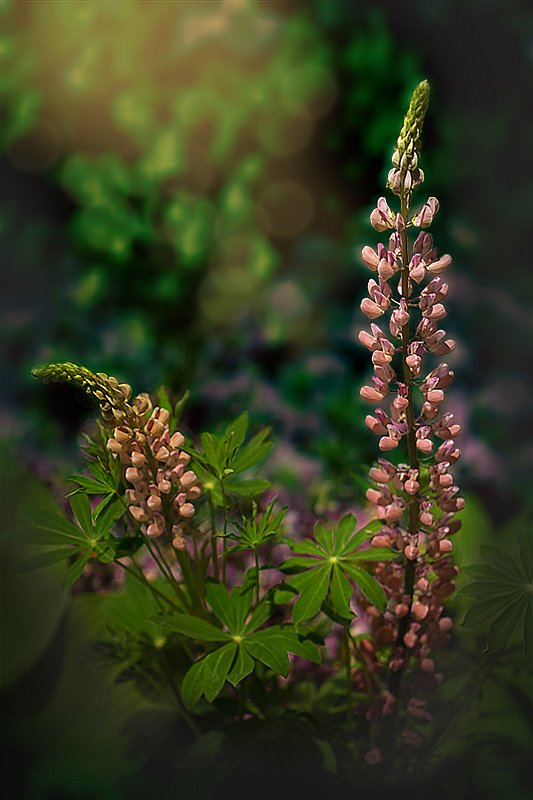
Heather is seen as iconic of Scotland, where the plant grows widely.
Purple heather is one of the two national flowers of Norway.

Heather is seen as iconic of Scotland, where the plant grows widely.
Purple heather is one of the two national flowers of Norway.
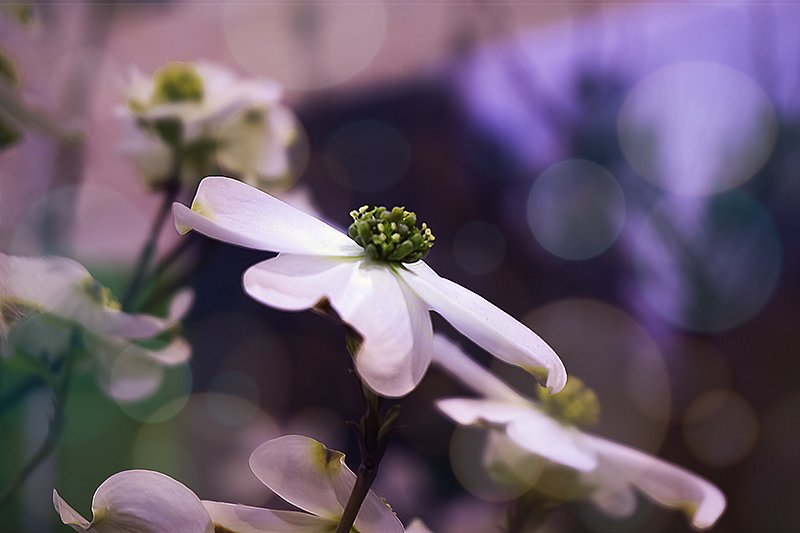
The inflorescence of the Pacific dogwood (Cornus nuttallii) is the official flower of the province of British Columbia. The flowering dogwood (Cornus florida) and its inflorescence are the state tree and the state flower respectively for the U.S. Commonwealth of Virginia. It is also the state tree of Missouri and the state flower of North Carolina and the state memorial tree of New Jersey.
A Christian legend of unknown origin proclaims that the cross used to crucify Jesus was constructed of dogwood. As the story goes, during the time of Jesus, the dogwood was larger and stronger than it is today and was the largest tree in the area of Jerusalem. After his crucifixion, Jesus changed the plant to its current form: he shortened it and twisted its branches to ensure an end to its use for the construction of crosses. He also transformed its inflorescence into a representation of the crucifixion itself, with the four white bracts cross-shaped representing the four corners of the cross, each bearing a rusty indentation as of a nail, the red stamens of the flower representing Jesus' crown of thorns, and the clustered red fruit representing his blood.
In the Victorian era, flowers or sprigs of dogwood were presented to unmarried women by male suitors to signify affection. The returning of the flower conveyed indifference on the part of the woman; if she kept it, it became a sign of mutual interest.
The term "dogwood winter", in colloquial use in the American Southeast, is sometimes used to describe a cold snap in spring, presumably because farmers believed it was not safe to plant their crops until after the dogwoods blossomed.
(wikipedia)

Winter Garden Dilworth Park this year are packed with whimsically-crafted reindeer topiaries, seasonal plantings and an open-air layout
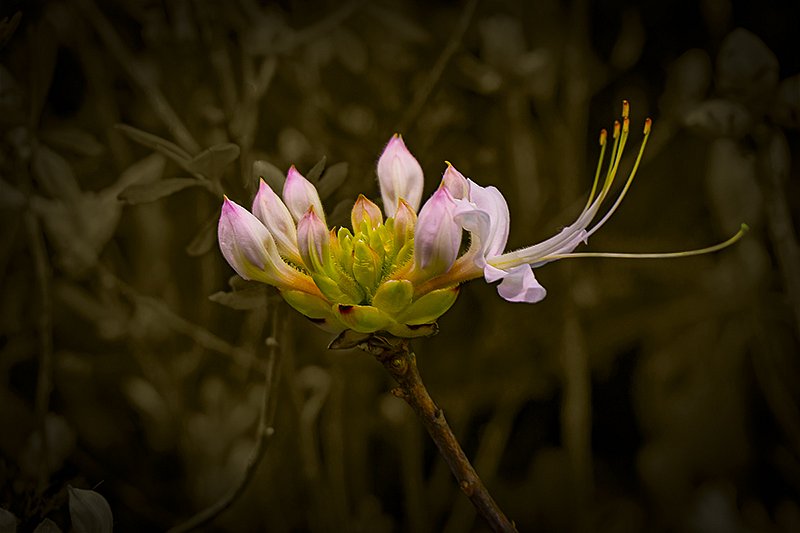
oneysuckles are valued as garden plants, for their ability to cover unsightly walls and outbuildings, their profuse tubular flowers in early summer, and the intense fragrance of many varieties. The hardy climbing types need their roots in shade, and their flowering tops in sunlight or very light shade. Varieties need to be chosen with care, as they can become substantial.
Honeysuckle is renowned for its colorful, fragrant flowers and variously colored fruit, indicating the presence of complex phytochemicals underlying these properties. Component analyses of berries from 27 different cultivars and 3 genotypes of edible honeysuckle (Lonicera caerulea var. kamtschatica) showed the presence of iridoids, anthocyanins, flavonols, flavanonols, flavones, flavan-3-ols, and phenolic acids. While sugars determine the level of sweetness in the berries, organic acids and polyphenols are responsible for the sour taste and tartness..Some 51 of the same compounds in berries are found in flowers, although the proportions of these compounds varied among cultivars studied.
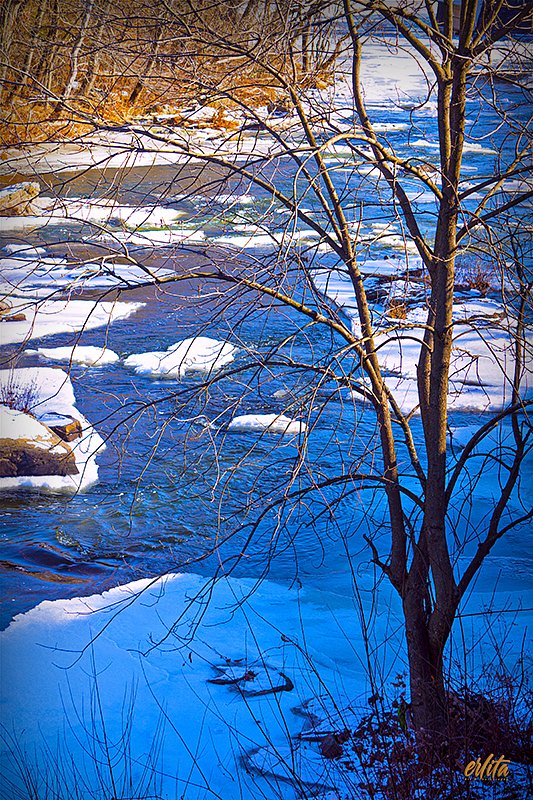
Why do the river freeze? The deeper and wider the river, and the faster the water flow, the less likely it is to freeze. Moving water generates friction, which heats the water (even if only a bit).
In the event that smaller rivers or streams freeze through from the surface to the river bed, fish will most likely already have escaped the impending ice trap by making a temperature-triggered journey from their summer habitats to their more suitable winter ones.
In larger rivers, although they may appear completely frozen, a column of water usually remains liquid below the thick layer of ice. Fish have developed unique physical and behavioral adaptations that allow them to thrive there. Most fish, fresh and marine alike, are poikilothermic, meaning that the temperature inside their body is determined by the temperature of the water around them. So, much like the way humans are less active during cold winter weather, most aspects of fish activity changes in winter waters.
Physical adaptations to winter conditions include a significantly slowed metabolism and slowed swimming abilities. Essentially, fish rely on the lowest energy input and output that they can withstand, hiding out under the ice until waters begin to warm again. Although this makes it difficult for fish to search for food and avoid predators, fish have developed several behavioral adaptations as a trade-off. As winter sets in, fish undergo changes in habitat preference, searching for areas of the river with larger boulders and rocks under which they can hide. They also shift to more overall activity at night; mostly as a means to avoid daytime predation, but also to escape the possibility of being trapped in their rocky hiding places by overnight formations of ice on the river bed. If these submerged ice clusters (called anchor ice,) form in the wrong place during colder nighttime temperatures, they can block the fish’s way out of their hiding place.
(cincinnati.com, fishbio.com)
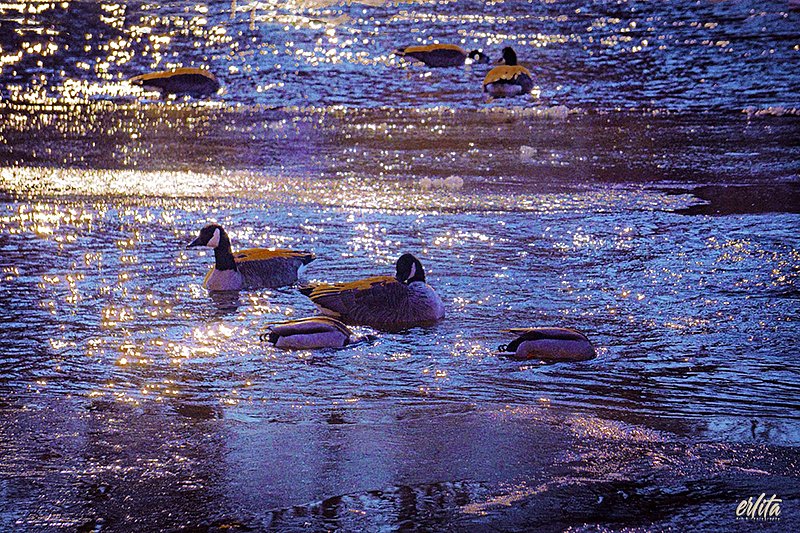
Canada geese nest in the same region their parents did, often in the same nest every year.
Many people recognize the Canada goose by its distinctive black head, white cheeks, long, black neck and webbed feet. In general, the larger the bird means the longer the neck and the more its body is elongated. Scientists believe, however, that there are 11 confirmed subspecies of geese in Canada, and most differ in appearance. There is a large range in weight between the subspecies, from 1.1 kilograms for the cackling Canada goose to eight kilograms for the giant Canada goose. Wingspans also vary from 90 centimetres to two metres. The under parts for each subspecies can vary in colour, ranging from light pearl-grey to chestnut and blackish brown. Both male and female geese, however, look the same if they're of the same subspecies.
Canada geese can are found in most types of wetland. Although they are waterfowl, they spend as much time on land as they do in the water. In the spring and summer months, the geese eat leaves, flowers, stems, roots, seeds and berries. They will often eat for 12 hours or more a day to consume a sufficient amount of nutrients. They feed even more intensively right before they fly north after the winter, storing energy for an active breeding period and preparing for a lack of food in the spring. Canada geese can also be found grazing on lawns, in parks and on golf courses.
Canada geese normally migrate to southern agricultural areas for the winter. To do so, they fly in the distinct “V” pattern, where one goose is the leader and its flock follows behind in a v-shape. This helps the geese save energy when they migrate, benefit from the air currents passing the leader, permitting them to fly longer distances. The v-shape also allows for an easier coordination of the flock's movements, such as a change in flight speed or direction. The formation lets these changes be communicated quickly and efficiently to all geese in the flock.
When geese are flying in formation, you can often hear them calling to each other. Adult Canada geese have about 13 different calls, ranging from low clucks and murmurs communicated while feeding and loud greeting and alarm calls. Goslings even start to communicate with their parents while they're still in the egg. A gosling can make a call, or peep, if it's distressed or content. (canadiangeographic.ca)

Not all leaves turn vivid colors in the fall. Only a few of our many species of deciduous trees—notably maple, aspen, birch, oak, and gum—produce truly stellar performances for our annual autumn spectacular in North America.
Several factors contribute to fall color (temperature, precipitation, soil moisture), but the main agent is light, or actually the lack of it. The amount of daylight relates to the timing of the autumnal equinox, when day and night are roughly equal, but nights are growing longer.
As the autumn days grow shorter, the reduced light starts chemical changes in deciduous plants, causing a corky wall of cells (called the “abscission zone”) to form between the twig and the leaf stalk. This corky wall eventually causes the leaf to drop off in the breeze.
As the corky cells multiply, they begin to seal off the vessels that supply the leaf with nutrients and water and also block the exit vessels to some extent, trapping simple sugars in the leaves. The combination of reduced light, lack of nutrients, and less water triggers the trees to start the process of breaking down the pigment chlorophyll, which contains valuable nutrients and is the source of the “green” in leaves. As chlorophyll is broken down and the green color fades, yellows and reds are revealed.
why-do-leaves-change-color.jpg Where Do the Bright Yellow and Red Colors Come From?
Once the green chlorophyll is gone, other pigments begin to reveal their bright faces. These pigments, carotenoids (yellow) and anthocyanins (red), are responsible for the lovely colors of fall.
Yellow carotenoids exist in the leaf all summer, but are masked by chlorophyll during the growing season. Red anthocyanins, on the other hand, are freshly produced by plants as fall conditions ramp up. Suprisingly enough, scientists aren’t enitirely sure why trees bother to produce a new pigment while otherwise trying to save their precious resources for the winter ahead. Some suggest that the bright red color could deter insect pests from feeding on leaves, or that red attracts birds that feed on (and spread) the trees’ fruit.
However, another interesting theory is that the red pigment acts as a sort of sunscreen for the leaves, staving off damage from bright autumn sunlight and allowing the leaves to stay on the tree for longer than they would if they were to remain green or even yellow.
Sugar trapped in autumn leaves by the corky wall is largely responsible for the vividness of the colors. Some additional anthocyanins are also manufactured by sunlight acting on the trapped sugar. This is why fall foliage is so sparkling after several bright fall days and more muted during rainy spells.
As autumn carries on, leaves begin to turn brown once all their nutrients are re-absorbed by the tree. The brown color is the result of the leftover tannins, a chemical that exists in many leaves, especially oaks. (almanac.com)

The terms "fall" and "autumn" can be used interchangeably in the United States, though, when it comes down to it, it's actually the term "fall" that is more popular in America. "Autumn" came from the Latin word "autumnus," with the root of the word having connotations regarding "the passing of the year." The term "fall" was likely a deviation from the Old English words "fiaell" and "feallan," both of which mean "to fall from a height." It is assumed that this new name for the season was inspired by trees' falling leaves. (bustle)
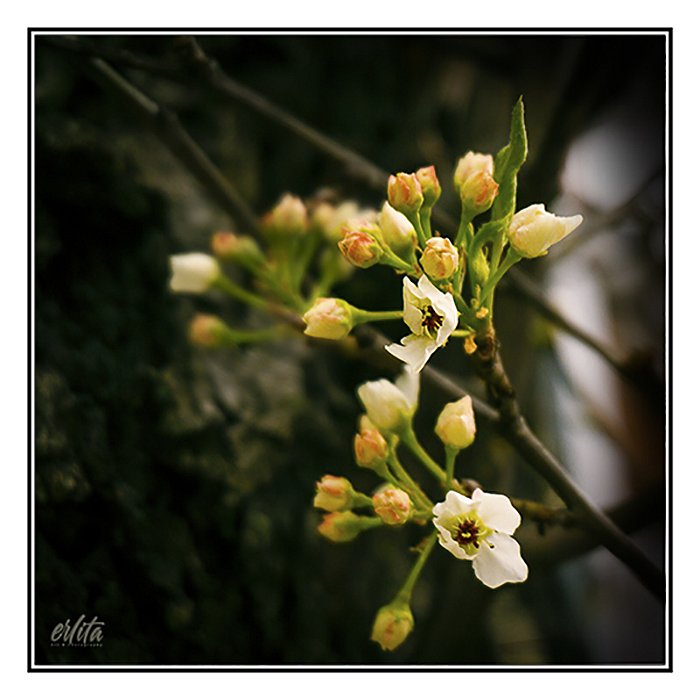
A cherry blossom is a flower of many trees of genus Prunus. The most well-known species is the Japanese cherry, Prunus serrulata, which is commonly called sakura
They are widely distributed, especially in the temperate zone of the Northern Hemisphere including Japan, Taiwan, Korea, Mainland China, Nepal, India, Pakistan, Afghanistan, Iran, Myanmar, Thailand, Europe, United States, Canada and West Siberia. Along with the chrysanthemum, the cherry blossom is considered the national flower of Japan.
All varieties of cherry blossom trees produce small, unpalatable fruit or edible cherries..
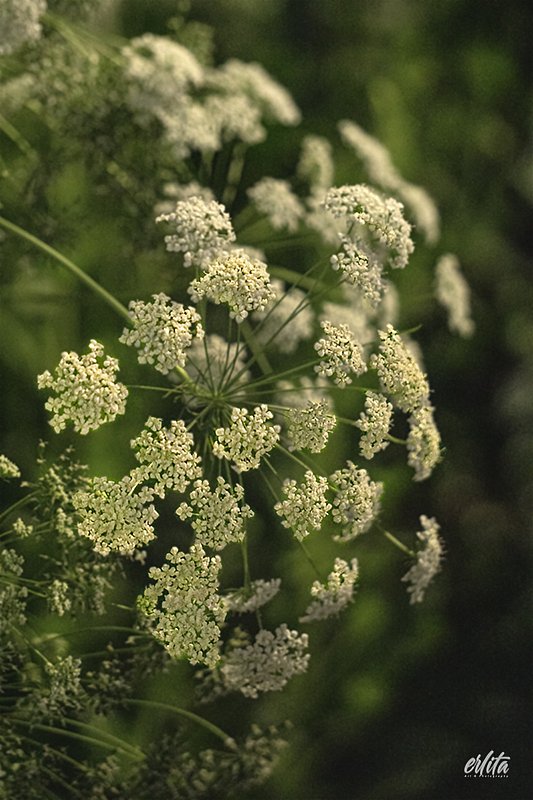
Ammi majus, commonly called bishop's weed, false bishop's weed, bullwort greater ammi, lady's lace, false Queen Anne's lace or laceflower, is a member of the carrot family Apiaceae. The plant, which has white lace-like flower clusters, is native to the Nile River Valley.

" Catching a falling cherry blossom makes your first love come true."
Cherry blossoms, also known as sakura in Japan, are the small, delicate pink flowers produced by cherry blossom trees.
Cherry blossoms hold elevated status in China, signifying love and the female mystique (beauty, strength and sexuality)
Tied to the Buddhist themes of mortality, mindfulness and living in the present, Japanese cherry blossoms are a timeless metaphor for human existence. Blooming season is powerful, glorious and intoxicating, but tragically short-lived — a visual reminder that our lives, too, are fleeting.
Sakura have therefore always signalled the beginning of spring, a time of renewal and optimism. With the blooming season coinciding with the beginning of the Japanese calendar year, they also bring hope and new dreams at a time. When n cherry blossoms are in full bloom, the future is bursting with possibilities
(notwithoutmypassport.com).