
2021 Dine out
Sometimes you have to accept the fact that certain things will never go back to how they use to be
Just stay
All I can ever ask of you is
to stay......
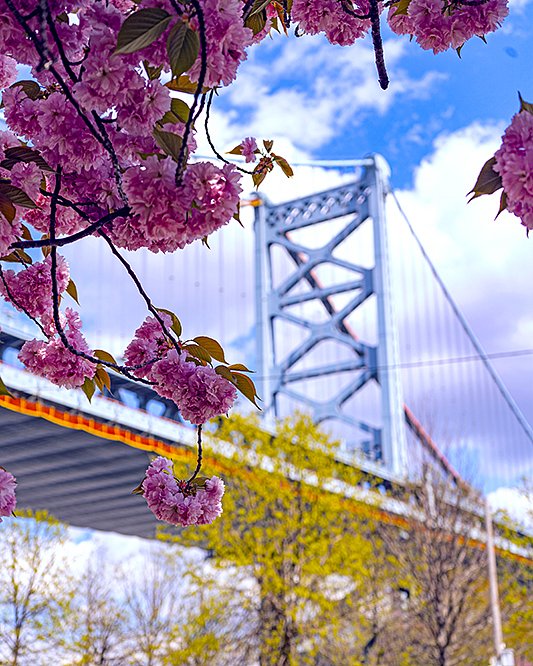
Ben Franklin Bridge in Spring 21
The most precious gift we can offer others is our presence, when mindfulness embraces those we love, they will bloom like flowers (Thich Nhat Hanh)
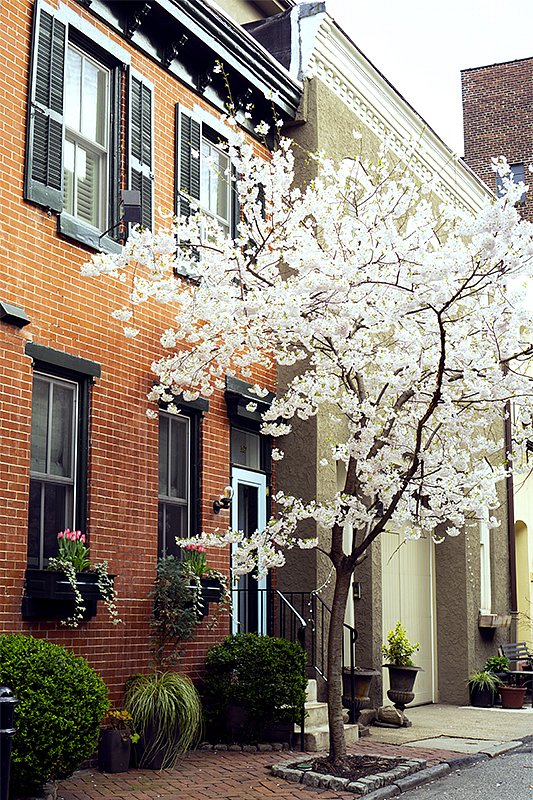
white blooming cherry Blossoms
Expecting too much will only leaves you in TEARS.
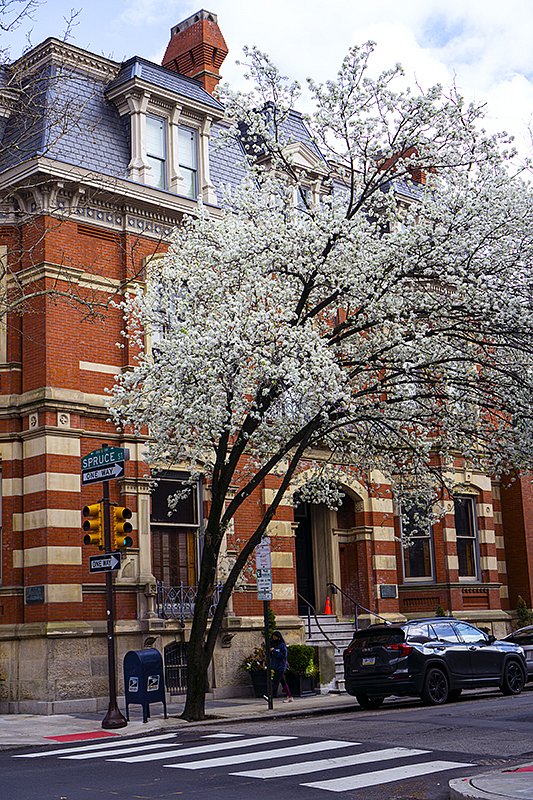
Keep blooming
Always remember how rare you are,
There is no-one quite like you
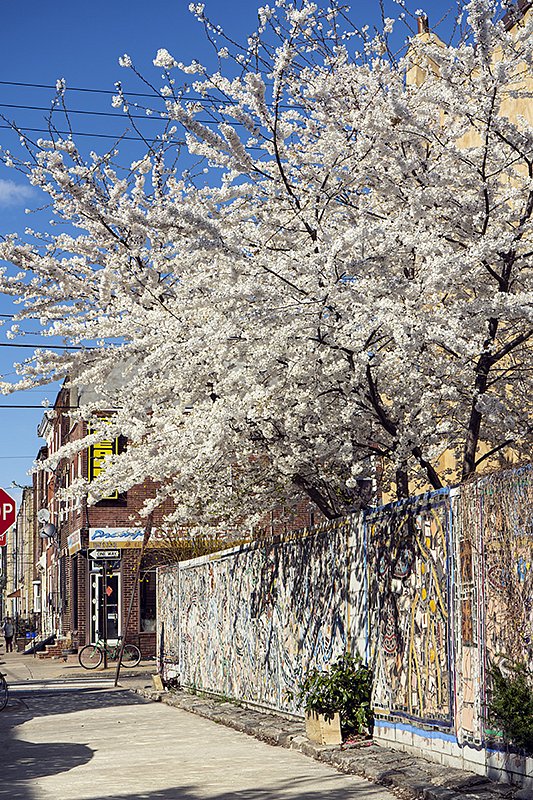
Full Blooms @Dickinson
Wherever life plants, bloom with grace
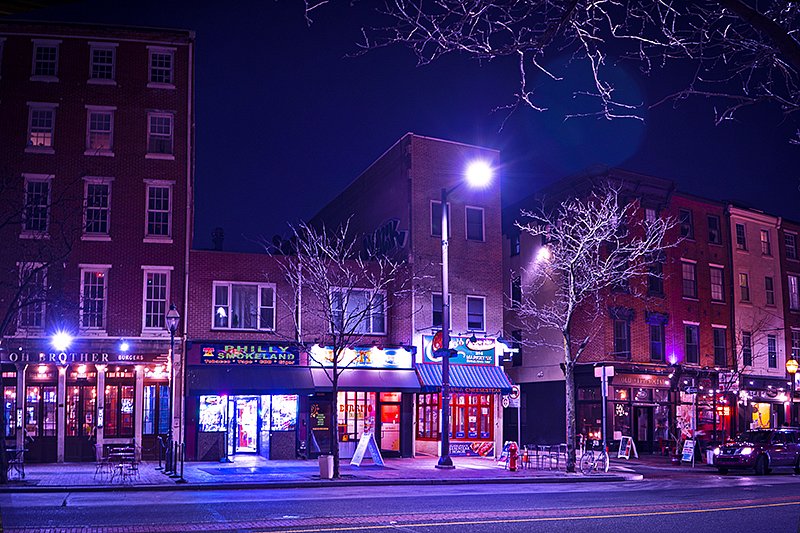
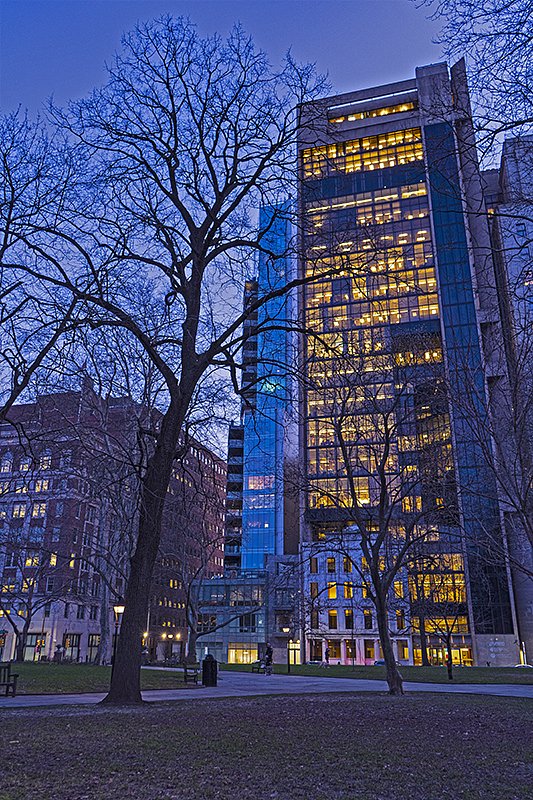
Philadelphia City Life
The city looks even prettier at night
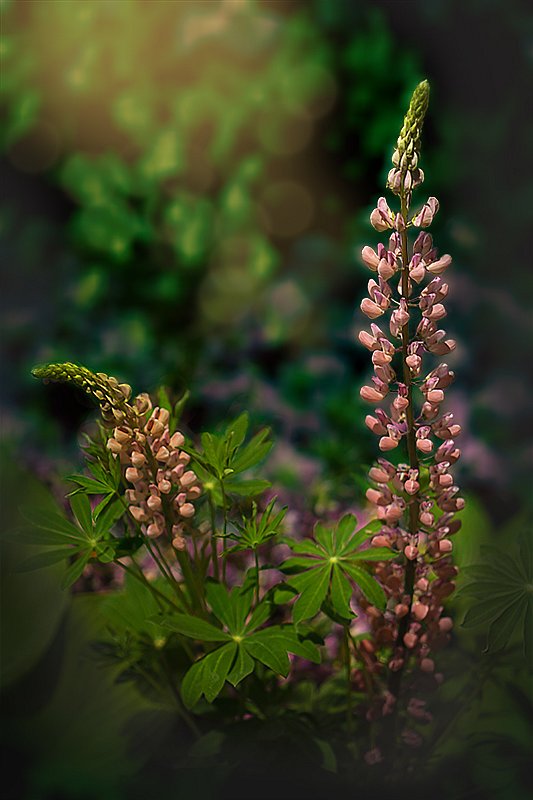
Calluna Heather Flower
Heather is seen as iconic of Scotland, where the plant grows widely.
Purple heather is one of the two national flowers of Norway.

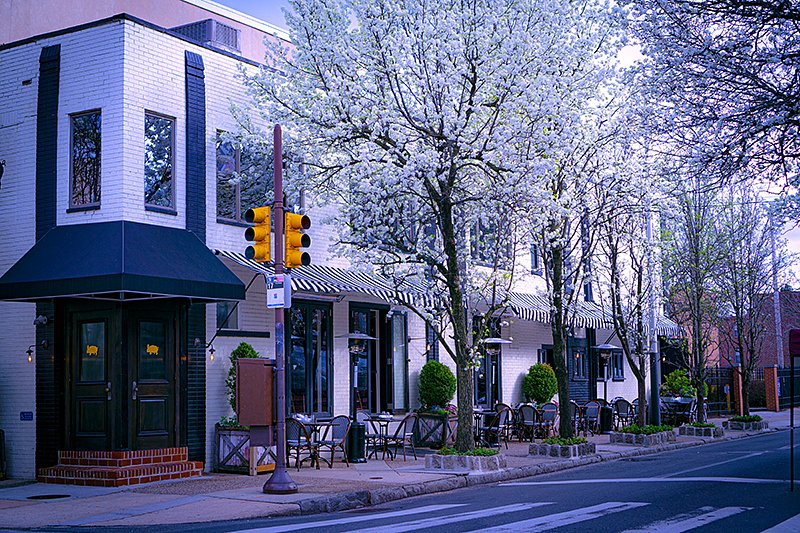
Open air cafe
The new year brings a new air to the city. The new dining restrictions will start on January 16th. Indoor dining will be allowed again.

Winter Garden Dilworth PArk
Winter Garden Dilworth Park this year are packed with whimsically-crafted reindeer topiaries, seasonal plantings and an open-air layout

Reindeer Topriary
Topiary is the horticultural practice of training perennial plants by clipping the foliage and twigs of trees, shrubs and subshrubs to develop and maintain clearly defined shapes,[1] whether geometric or fanciful. The term also refers to plants which have been shaped in this way. As an art form it is a type of living sculpture. The word derives from the Latin word for an ornamental landscape gardener, topiarius, a creator of topia or "places", a Greek word that Romans also applied to fictive indoor landscapes executed in fresco. (wikipedia)

George B. McCloellan
George Brinton McClellan (December 3, 1826 – October 29, 1885) was an American soldier, civil engineer, railroad executive, and politician who served as the 24th Governor of New Jersey
.Artist : Henry Jackson Ellicott (1894)
Type Bronze
Dimensions 4.42 m × 1.5 m × 4.6 m (14 ft 6 in × 5 ft × 15 ft) (wikipedia)

The Visit Philadelphia Holiday tree @ Cityhall
The Visit Philadelphia Holiday Tree is a 60-year-old white fir standing 50 feet tall. It is adorned with more than 5,000 linear feet of lights and more than a dozen handcrafted ornaments. Two new Black Lives Matter ornaments have been added to the tree this year signifying the city's belief in social justice. The tree-topper is a 130-pound Liberty Bell. The base was created by artist David Korins, known for his work as set designer of Hamilton. (6abcnews)


Brick house
A monumental sculpture by acclaimed artist Simone Leigh has been installed at the corner of 34th and Walnut Streets, the gateway to College Green at the University of Pennsylvania.
Titled “Brick House,” the piece depicts a Black woman’s head atop a form that suggests a skirt or perhaps a building. It is the first large-scale piece in the artist’s Anatomy of Architecture series that merges human form with diverse architectural elements. Cast in bronze, the work stands 16 feet high, 9 feet in diameter at its base, and weighs 5,900 pounds. The piece features cowrie shells on the woman’s braids which symbolize wealth, femininity, and the African slave trade in which the shells were used as currency,
The sculpture is a gift from 1987 Penn graduate Glenn Fuhrman, who also earned an MBA degree from The Wharton School the following year, and 1995 Penn graduate Amanda Fuhrman. They advocated for the sculpture's placement on Penn's campus after learning that Leigh hoped to display her artwork on a college campus.


The street of lights
When we are talking about street lights, we have to start from Christmas lights decoration.
Christmas lights (also known as fairy lights or string lights) are lights often used for decoration in celebration of Christmas, often on display throughout the Christmas season including Advent and Christmastide. The custom goes back to when Christmas trees were decorated with candles, which symbolized Christ being the light of the world
The first known electrically illuminated Christmas tree was the creation of Edward H. Johnson, an associate of inventor Thomas Edison. While he was vice president of the Edison Electric Light Company, a predecessor of today's Con Edison electric utility, he had Christmas tree light bulbs especially made for him. He proudly displayed his Christmas tree, which was hand-wired with 80 red, white and blue electric incandescent light bulbs the size of walnuts, on December 22, 1882 at his home on Fifth Avenue in New York City. Local newspapers ignored the story, seeing it as a publicity stunt. However, it was published by a Detroit newspaper reporter, and Johnson has become widely regarded as the Father of Electric Christmas Tree Lights. By 1900, businesses started stringing up Christmas lights behind their windows. Christmas lights were too expensive for the average person; as such, electric Christmas lights did not become the majority replacement for candles until 1930.
In 1895, US President Grover Cleveland sponsored the first electrically-lit Christmas tree in the White House. It was a huge specimen, featuring over a hundred multicolored lights. The first commercially-produced Christmas tree lamps were manufactured in strings of multiples of eight sockets by the General Electric Co. of Harrison, New Jersey. Each socket took a miniature two-candela carbon-filament lamp.
From that point on, electrically-illuminated Christmas trees (only indoors) grew with mounting enthusiasm in the US and elsewhere. San Diego in 1904, Appleton, Wisconsin in 1909, and New York City in 1912 were the first recorded instances of the use of Christmas lights outside. McAdenville, North Carolina claims to have been the first in 1956. The Library of Congress credits the town for inventing "the tradition of decorating evergreen trees with Christmas lights dates back to 1956 when the McAdenville Men's Club conceived of the idea of decorating a few trees around the McAdenville Community Center. However, the Rockefeller Center Christmas Tree has had "lights" since 1931, but did not have real electric lights until 1956. Furthermore, Philadelphia's Christmas Light Show and Disney's Christmas Tree also began in 1956. Though General Electric sponsored community lighting competitions during the 1920s, it would take until the mid-1950s for the use of such lights to be adopted by average households.
Christmas lights found use in places other than Christmas trees. By 1919, city electrician John Malpiede began decorating the new Civic Center Park in Denver, Colorado, eventually expanding the display to the park's Greek Amphitheater and later to the adjacent new Denver City and County Building - City Hall upon its completion in 1932. Soon, strings of lights adorned mantles and doorways inside homes, and ran along the rafters, roof lines, and porch railings of homes and businesses. In recent times, many city skyscrapers are decorated with long mostly-vertical strings of a common theme, and are activated simultaneously in Grand Illumination ceremonies.
In 1963, a boycott of Christmas lights was done in Greenville, North Carolina to protest the segregation that kept blacks from being employed by downtown businesses in Greenville, during the Christmas sales season. Known as the Black Christmas boycott or "Christmas Sacrifice", it was an effective way to protest the cultural and fiscal segregation in the town with 33% black population. Light decorations in the homes, on the Christmas trees, or outside the house were not shown, and only six houses in the black community broke the boycott that Christmas (wikipedia)


Frozen River
Why do the river freeze? The deeper and wider the river, and the faster the water flow, the less likely it is to freeze. Moving water generates friction, which heats the water (even if only a bit).
In the event that smaller rivers or streams freeze through from the surface to the river bed, fish will most likely already have escaped the impending ice trap by making a temperature-triggered journey from their summer habitats to their more suitable winter ones.
In larger rivers, although they may appear completely frozen, a column of water usually remains liquid below the thick layer of ice. Fish have developed unique physical and behavioral adaptations that allow them to thrive there. Most fish, fresh and marine alike, are poikilothermic, meaning that the temperature inside their body is determined by the temperature of the water around them. So, much like the way humans are less active during cold winter weather, most aspects of fish activity changes in winter waters.
Physical adaptations to winter conditions include a significantly slowed metabolism and slowed swimming abilities. Essentially, fish rely on the lowest energy input and output that they can withstand, hiding out under the ice until waters begin to warm again. Although this makes it difficult for fish to search for food and avoid predators, fish have developed several behavioral adaptations as a trade-off. As winter sets in, fish undergo changes in habitat preference, searching for areas of the river with larger boulders and rocks under which they can hide. They also shift to more overall activity at night; mostly as a means to avoid daytime predation, but also to escape the possibility of being trapped in their rocky hiding places by overnight formations of ice on the river bed. If these submerged ice clusters (called anchor ice,) form in the wrong place during colder nighttime temperatures, they can block the fish’s way out of their hiding place.
(cincinnati.com, fishbio.com)


Canada Goose
Canada geese nest in the same region their parents did, often in the same nest every year.
Many people recognize the Canada goose by its distinctive black head, white cheeks, long, black neck and webbed feet. In general, the larger the bird means the longer the neck and the more its body is elongated. Scientists believe, however, that there are 11 confirmed subspecies of geese in Canada, and most differ in appearance. There is a large range in weight between the subspecies, from 1.1 kilograms for the cackling Canada goose to eight kilograms for the giant Canada goose. Wingspans also vary from 90 centimetres to two metres. The under parts for each subspecies can vary in colour, ranging from light pearl-grey to chestnut and blackish brown. Both male and female geese, however, look the same if they're of the same subspecies.
Canada geese can are found in most types of wetland. Although they are waterfowl, they spend as much time on land as they do in the water. In the spring and summer months, the geese eat leaves, flowers, stems, roots, seeds and berries. They will often eat for 12 hours or more a day to consume a sufficient amount of nutrients. They feed even more intensively right before they fly north after the winter, storing energy for an active breeding period and preparing for a lack of food in the spring. Canada geese can also be found grazing on lawns, in parks and on golf courses.
Canada geese normally migrate to southern agricultural areas for the winter. To do so, they fly in the distinct “V” pattern, where one goose is the leader and its flock follows behind in a v-shape. This helps the geese save energy when they migrate, benefit from the air currents passing the leader, permitting them to fly longer distances. The v-shape also allows for an easier coordination of the flock's movements, such as a change in flight speed or direction. The formation lets these changes be communicated quickly and efficiently to all geese in the flock.
When geese are flying in formation, you can often hear them calling to each other. Adult Canada geese have about 13 different calls, ranging from low clucks and murmurs communicated while feeding and loud greeting and alarm calls. Goslings even start to communicate with their parents while they're still in the egg. A gosling can make a call, or peep, if it's distressed or content. (canadiangeographic.ca)