Erlita Art & Photography
  • Home
  • Timeline
  • Albums
  • Contact Us / Order
  • Comments
  • About me
  • Follow me @ Instagram
Home / Tags / philadelphia
Share
Content Published November 15, 2020

The street of lights

When we are talking about street lights, we have to start from Christmas lights decoration.

Christmas lights (also known as fairy lights or string lights) are lights often used for decoration in celebration of Christmas, often on display throughout the Christmas season including Advent and Christmastide. The custom goes back to when Christmas trees were decorated with candles, which symbolized Christ being the light of the world

The first known electrically illuminated Christmas tree was the creation of Edward H. Johnson, an associate of inventor Thomas Edison. While he was vice president of the Edison Electric Light Company, a predecessor of today's Con Edison electric utility, he had Christmas tree light bulbs especially made for him. He proudly displayed his Christmas tree, which was hand-wired with 80 red, white and blue electric incandescent light bulbs the size of walnuts, on December 22, 1882 at his home on Fifth Avenue in New York City. Local newspapers ignored the story, seeing it as a publicity stunt. However, it was published by a Detroit newspaper reporter, and Johnson has become widely regarded as the Father of Electric Christmas Tree Lights. By 1900, businesses started stringing up Christmas lights behind their windows. Christmas lights were too expensive for the average person; as such, electric Christmas lights did not become the majority replacement for candles until 1930.

In 1895, US President Grover Cleveland sponsored the first electrically-lit Christmas tree in the White House. It was a huge specimen, featuring over a hundred multicolored lights. The first commercially-produced Christmas tree lamps were manufactured in strings of multiples of eight sockets by the General Electric Co. of Harrison, New Jersey. Each socket took a miniature two-candela carbon-filament lamp.

From that point on, electrically-illuminated Christmas trees (only indoors) grew with mounting enthusiasm in the US and elsewhere. San Diego in 1904, Appleton, Wisconsin in 1909, and New York City in 1912 were the first recorded instances of the use of Christmas lights outside. McAdenville, North Carolina claims to have been the first in 1956. The Library of Congress credits the town for inventing "the tradition of decorating evergreen trees with Christmas lights dates back to 1956 when the McAdenville Men's Club conceived of the idea of decorating a few trees around the McAdenville Community Center. However, the Rockefeller Center Christmas Tree has had "lights" since 1931, but did not have real electric lights until 1956. Furthermore, Philadelphia's Christmas Light Show and Disney's Christmas Tree also began in 1956. Though General Electric sponsored community lighting competitions during the 1920s, it would take until the mid-1950s for the use of such lights to be adopted by average households.

Christmas lights found use in places other than Christmas trees. By 1919, city electrician John Malpiede began decorating the new Civic Center Park in Denver, Colorado, eventually expanding the display to the park's Greek Amphitheater and later to the adjacent new Denver City and County Building - City Hall upon its completion in 1932. Soon, strings of lights adorned mantles and doorways inside homes, and ran along the rafters, roof lines, and porch railings of homes and businesses. In recent times, many city skyscrapers are decorated with long mostly-vertical strings of a common theme, and are activated simultaneously in Grand Illumination ceremonies.

In 1963, a boycott of Christmas lights was done in Greenville, North Carolina to protest the segregation that kept blacks from being employed by downtown businesses in Greenville, during the Christmas sales season. Known as the Black Christmas boycott or "Christmas Sacrifice", it was an effective way to protest the cultural and fiscal segregation in the town with 33% black population. Light decorations in the homes, on the Christmas trees, or outside the house were not shown, and only six houses in the black community broke the boycott that Christmas (wikipedia)

17addison christmas decoration outdoor philadelphia philly photography street lights string lights

See more in light

Share
Content Published November 12, 2020

John Barry

John Barry (March 25, 1745 – September 13, 1803) was an Irish-American officer in the Continental Navy during the American Revolutionary War and later in the United States Navy. He has been credited as "The Father of the American Navy" (and shares that moniker with John Paul Jones, and John Adams) and was appointed a captain in the Continental Navy on December 7, 1775. He was the first captain placed in command of a U.S. warship commissioned for service under the Continental flag.

After the war, he became the first commissioned U.S. naval officer, at the rank of commodore, receiving his commission from President George Washington in 1797.

This bronze statue of John Barry (1745-1803) in Independence Square was sculpted by Samuel Murray (1869-1941), the artist who produced the statue of George Washington in front of Independence Hall. The statue was commissioned by the Friendly Sons of St. Patrick of Philadelphia, who then donated the statue to the City. The piece was modeled by Murray, probably in Philadelphia, in 1906. It was cast by the Roman Bronze Works of Brooklyn, NY. The pedestal was built by the Harrison Granite Co. of Barre, VT. A crowd of 15,000 witnessed the unveiling of the statue on March 16, 1907. A number of details are known about Samuel Murray's execution of the sculpture of John Barry. Murray generally worked from life or used photographs or earlier portraits. In both cases, he first modeled a nude figure to establish the anatomy correctly. Before modeling John Barry, Murray studied Gilbert Stuart's painting of Barry and had a friend pose in Barry's own Revolutionary War uniform. George Washington (ca. 1910; north of Independence Hall), Dr. Joseph· Leidy (1907; Academy of Natural Sciences), and-Rev. Corby (1910; Gettysburg battlefield) are other sculptures by Murray.

A few changes were made to the piece shortly after it was dedicated. In 1912, a bronze tablet was added to the north side of the pedestal, as the inscription cut in the stone was illegible from a distance. In 1913, Samuel Murray repaired a finger on the vandalized statue. In 1915, a change in the grading of the base of the statue was approved by the Art Commission.

(wikipedia, nps.gov)

independence hall park philadelphia philly photography statue

See more in "architectural elements", park, photography, sculpture, statue

Share
Content Published November 4, 2020

Ringgold Place House

Ringgold Place House or known as the 1900 block of Waverly Street is comprised of 16 rowhomes, each 14 feet wide by 20 feet deep, with the 9-step front stoops accommodating a raised basement kitchen at street level. Waverly is barely the width of a sedan, with no street parking. When these properties were built in 1862, the street was called Ringgold Place, after Colonel Samuel Ringgold. Stone inlays bearing that name can still be seen on the corner properties(reading, “The Ringgold Place Houses (Built 1862) have been registered on the National Register of Historic Places.”). Construction during the Civil War era necessitated the small size and simple design of the houses, due to the scarcity of materials in wartime.

The small size was also due to their original use as workers’ housing, likely for the Berkshire Cotton Mill located on the next block at 20th Street and Ringgold Place. While 1,000 square feet may seem petite for one family, it is possible that multiple families may have occupied each rowhouse on Ringgold Place! The multiple door (basement and first floor) entries lend themselves to subdivision, and the tendency at the time was to squeeze workers into small quarters and to make the most out of existing housing stock. By 1895 the Berkshire Mills was closed, and the homes promptly transformed into more fashionable abodes, largely encouraged by the growing influence of Rittenhouse Square.

In 1925, architect George Howe purchased the block, and proceeded to update the properties, clean the facades, and added some decorative elements. The corner property of 1900 Waverly served as his office while working on his acclaimed PSFS building. He sold the homes in 1934.

Ringgold Place formally changed to Waverly Street sometime between 1895-1942, and the block was added National Register of Historic Places in 1983. (solorealty)

architecture building historicalbuilding philadelphia philly photography

See more in buiding, fall/autumn, historial building, photography

Share
Content Published November 4, 2020

St. James Apartment

The St. James is a luxury residential skyscraper in Washington Square West, Philadelphia, Pennsylvania, United States. The 498 feet (152 m), 45-story high-rise stands along Walnut Street and Washington Square and is the 15th tallest building in Philadelphia.

The Chicago-style, was designed by Solomon Cordwell Buenz & Associates Inc. with assistance by architectural firm Bower Lewis Thrower. The glass and concrete skyscraper's east and west facade is split between a curved wall, a squared-off wing, and a strip of blue glass that separates them. These buildings included three Federal-style rowhouses built in 1807 called York Row and the Italianate-style former headquarters of the Philadelphia Savings Fund Society, built in 1868–1869. After lying vacant and neglected for years, the only part of York Row preserved were the rowhouses' facades. Only a back portion of the Philadelphia Savings Fund Society building was demolished, the rest being incorporated as retail and office space.

Developer P&A Associates first attempted to develop the site in 1995, but was delayed because of a lack of investor confidence in the project. When the Philadelphia residential market improved in the late 1990s, St. James Associates Joint Venture, a joint venture of P&A Associates and others, began construction in November 2001. The high-rise building, completed in 2004, features 306 units, with each but the studio apartments having a private balcony. Its amenities include a 60 feet (18 m) swimming pool, a private courtyard, and a nine-story parking garage that makes up the base of the building.

The St. James has won several awards, including the 2006 National Association of Home Builders awards for Best Luxury Rental Apartment Primary Market and Best High-Rise Rental Apartment (Wikipedia)

apartment architecture building philadelphia photography

See more in apartment, buiding, photography

Share
Content Published November 4, 2020

Frozen River

Why do the river freeze? The deeper and wider the river, and the faster the water flow, the less likely it is to freeze. Moving water generates friction, which heats the water (even if only a bit).

In the event that smaller rivers or streams freeze through from the surface to the river bed, fish will most likely already have escaped the impending ice trap by making a temperature-triggered journey from their summer habitats to their more suitable winter ones.

In larger rivers, although they may appear completely frozen, a column of water usually remains liquid below the thick layer of ice. Fish have developed unique physical and behavioral adaptations that allow them to thrive there. Most fish, fresh and marine alike, are poikilothermic, meaning that the temperature inside their body is determined by the temperature of the water around them. So, much like the way humans are less active during cold winter weather, most aspects of fish activity changes in winter waters.

Physical adaptations to winter conditions include a significantly slowed metabolism and slowed swimming abilities. Essentially, fish rely on the lowest energy input and output that they can withstand, hiding out under the ice until waters begin to warm again. Although this makes it difficult for fish to search for food and avoid predators, fish have developed several behavioral adaptations as a trade-off. As winter sets in, fish undergo changes in habitat preference, searching for areas of the river with larger boulders and rocks under which they can hide. They also shift to more overall activity at night; mostly as a means to avoid daytime predation, but also to escape the possibility of being trapped in their rocky hiding places by overnight formations of ice on the river bed. If these submerged ice clusters (called anchor ice,) form in the wrong place during colder nighttime temperatures, they can block the fish’s way out of their hiding place.

(cincinnati.com, fishbio.com)

nature outdoor outdoornature philadelphia philly photography river water

See more in nature, Out door/ Nature, river

Share
Content Published November 4, 2020

Canada Goose

Canada geese nest in the same region their parents did, often in the same nest every year.

Many people recognize the Canada goose by its distinctive black head, white cheeks, long, black neck and webbed feet. In general, the larger the bird means the longer the neck and the more its body is elongated. Scientists believe, however, that there are 11 confirmed subspecies of geese in Canada, and most differ in appearance. There is a large range in weight between the subspecies, from 1.1 kilograms for the cackling Canada goose to eight kilograms for the giant Canada goose. Wingspans also vary from 90 centimetres to two metres. The under parts for each subspecies can vary in colour, ranging from light pearl-grey to chestnut and blackish brown. Both male and female geese, however, look the same if they're of the same subspecies.

Canada geese can are found in most types of wetland. Although they are waterfowl, they spend as much time on land as they do in the water. In the spring and summer months, the geese eat leaves, flowers, stems, roots, seeds and berries. They will often eat for 12 hours or more a day to consume a sufficient amount of nutrients. They feed even more intensively right before they fly north after the winter, storing energy for an active breeding period and preparing for a lack of food in the spring. Canada geese can also be found grazing on lawns, in parks and on golf courses.

Canada geese normally migrate to southern agricultural areas for the winter. To do so, they fly in the distinct “V” pattern, where one goose is the leader and its flock follows behind in a v-shape. This helps the geese save energy when they migrate, benefit from the air currents passing the leader, permitting them to fly longer distances. The v-shape also allows for an easier coordination of the flock's movements, such as a change in flight speed or direction. The formation lets these changes be communicated quickly and efficiently to all geese in the flock.

When geese are flying in formation, you can often hear them calling to each other. Adult Canada geese have about 13 different calls, ranging from low clucks and murmurs communicated while feeding and loud greeting and alarm calls. Goslings even start to communicate with their parents while they're still in the egg. A gosling can make a call, or peep, if it's distressed or content. (canadiangeographic.ca)

birds canada goose nature outdoor outdoornature philadelphia photography river water

See more in birds, nature, Out door/ Nature

Share
Content Published October 25, 2020

Independence Hall's Clock

In 1752, when Isaac Norris was selecting a man to build the first clock for the State House, today known as Independence Hall, he chose Thomas Stretch, the son of Peter Stretch his old friend and fellow council member, to do the job.

In 1753 Stretch erected a giant clock at the building's west end that resembled a tall clock (grandfather clock). The 40-foot-tall (12 m) limestone base was capped with a 14-foot (4.3 m) wooden case surrounding the clock's face, which was carved by Samuel Harding. The giant clock was removed about 1830. The clock's dials were mounted at the east and west ends of the main building connected by rods to the clock movement in the middle of the building. A new clock was designed and installed by Isaiah Lukens in 1828. The Lukens clock ran consecutively for eight days, "with four copper dials on each side that measured eight feet in diameter and clockworks that ensured sufficient power to strike the four-thousand pound bell made by John Wilbank." The Lukens clock remained in Independence Hall until 1877.

By mid-1753, the clock had been installed in the State House attic, but six years were to elapse before Thomas Stretch received any pay for it.

architectural element independence hall philadelphia philly photography

See more in "architectural elements", historial building, photography

Share
Content Published October 24, 2020

Cozy under trees

A tree’s growth is based, in part, on competition from its neighbors. Its first priority is to gain access to the sun, and in a forest up is the only way to go.

But this explains why a tree grows tall, not how. How tall a tree will grow is dictated partly by its genes. A tree’s height is also dictated by environmental conditions. Most trees are capable of being taller than they actually are, they’re just limited by deficiencies in light, water, or nutrients.

The tallest trees on the planet are coast redwoods. why? It comes down to water – not so much water supply, but the physics of moving water. We all know trees need water and that it comes from the ground. Transporting water from the roots, on through the trunk, and up to the leaves is a challenge. Unlike in animals, a tree’s vascular system has no heart; there is no pump of any kind. Water is not pushed up the tree. Instead, it is pulled from above: water molecules tend to stick to each other and to other substances. When moisture evaporates from the surface of a leaf, it pulls along a column of water that extends all the way back to the roots. The water is pulled from the soil to replace what was lost above. As a tree grows taller, it becomes increasingly difficult to get water to its topmost leaves. Eventually, this leads to drought stress and reduced photosynthesis and growth.

All trees have to deal with this reality of physics, but those lanky redwoods deal with it better than any others. And according to some researchers, their superiority may derive largely from the fog in which they live. Gigantic redwoods exist only in a narrow band along a few hundred coastal miles in northern California. They grow in wet temperate forests in steep valleys, buffered against wind, and receive well over 100 inches of precipitation annually. These forests are marked by consistently cool, moist conditions and an abundance of fog.

Evidently, redwoods are able to absorb water from fog directly into their leaves. According to the National Park Service, stewards of the tallest of them, fog accounts for 40 percent of a redwood’s moisture intake. So instead of fighting against the physics of pulling hundreds of gallons of water from the soil through the tree’s complex – and really long – vasculature, they avail themselves of a more handy source. With access to water in the fog right near the leaves, the plumbing problem becomes something of a plumbing advantage.(northernwoodlands)

independence hall park philadelphia philly photography

See more in park, photography

Share
Content Published October 24, 2020

Liberty Bell and Reflection

The Liberty Bell, previously called the State House Bell or Old State House Bell, is an iconic symbol of American independence, located in Philadelphia, Pennsylvania. Once placed in the steeple of the Pennsylvania State House (now renamed Independence Hall), the bell today is located in the Liberty Bell Center in Independence National Historical Park. The bell was commissioned in 1752 by the Pennsylvania Provincial Assembly from the London firm of Lester and Pack (known subsequently as the Whitechapel Bell Foundry), and was cast with the lettering "Proclaim LIBERTY Throughout all the Land unto all the Inhabitants Thereof", a Biblical reference from the Book of Leviticus (25:10). The bell first cracked when rung after its arrival in Philadelphia, and was twice recast by local workmen John Pass and John Stow, whose last names appear on the bell. In its early years, the bell was used to summon lawmakers to legislative sessions and to alert citizens about public meetings and proclamations. (Wikipedia)

independence hall philadelphia philly reflection

See more in documentation, historial building, photography

Share
Content Published October 24, 2020

A sea of falling leaves

Not all leaves turn vivid colors in the fall. Only a few of our many species of deciduous trees—notably maple, aspen, birch, oak, and gum—produce truly stellar performances for our annual autumn spectacular in North America.

Several factors contribute to fall color (temperature, precipitation, soil moisture), but the main agent is light, or actually the lack of it. The amount of daylight relates to the timing of the autumnal equinox, when day and night are roughly equal, but nights are growing longer.

As the autumn days grow shorter, the reduced light starts chemical changes in deciduous plants, causing a corky wall of cells (called the “abscission zone”) to form between the twig and the leaf stalk. This corky wall eventually causes the leaf to drop off in the breeze.

As the corky cells multiply, they begin to seal off the vessels that supply the leaf with nutrients and water and also block the exit vessels to some extent, trapping simple sugars in the leaves. The combination of reduced light, lack of nutrients, and less water triggers the trees to start the process of breaking down the pigment chlorophyll, which contains valuable nutrients and is the source of the “green” in leaves. As chlorophyll is broken down and the green color fades, yellows and reds are revealed.

why-do-leaves-change-color.jpg Where Do the Bright Yellow and Red Colors Come From?

Once the green chlorophyll is gone, other pigments begin to reveal their bright faces. These pigments, carotenoids (yellow) and anthocyanins (red), are responsible for the lovely colors of fall.

Yellow carotenoids exist in the leaf all summer, but are masked by chlorophyll during the growing season. Red anthocyanins, on the other hand, are freshly produced by plants as fall conditions ramp up. Suprisingly enough, scientists aren’t enitirely sure why trees bother to produce a new pigment while otherwise trying to save their precious resources for the winter ahead. Some suggest that the bright red color could deter insect pests from feeding on leaves, or that red attracts birds that feed on (and spread) the trees’ fruit.

However, another interesting theory is that the red pigment acts as a sort of sunscreen for the leaves, staving off damage from bright autumn sunlight and allowing the leaves to stay on the tree for longer than they would if they were to remain green or even yellow.

Sugar trapped in autumn leaves by the corky wall is largely responsible for the vividness of the colors. Some additional anthocyanins are also manufactured by sunlight acting on the trapped sugar. This is why fall foliage is so sparkling after several bright fall days and more muted during rainy spells.

As autumn carries on, leaves begin to turn brown once all their nutrients are re-absorbed by the tree. The brown color is the result of the leftover tannins, a chemical that exists in many leaves, especially oaks. (almanac.com)

autumn fall fallautumn fallingleaves outdoornature philadelphia

See more in fall/autumn, falling leaves, nature, Out door/ Nature

Share
Content Published October 19, 2020

A hint of fall

The terms "fall" and "autumn" can be used interchangeably in the United States, though, when it comes down to it, it's actually the term "fall" that is more popular in America. "Autumn" came from the Latin word "autumnus," with the root of the word having connotations regarding "the passing of the year." The term "fall" was likely a deviation from the Old English words "fiaell" and "feallan," both of which mean "to fall from a height." It is assumed that this new name for the season was inspired by trees' falling leaves. (bustle)

autumn fall falling leaves nature outdoor outdoornature park philadelphia philly photography

See more in nature, Out door/ Nature, park, photography

Share
Content Published September 2, 2020

Reading Terminal Station

In 1889, the Philadelphia and Reading Railway decided to build a train depot, passenger station, and company headquarters on the corner of 12th and Market Streets. The move came eight years after the Pennsylvania Railroad opened its Broad Street Station several blocks away at 15th and Market Streets, and one year after the Baltimore and Ohio Railroad opened its 24th Street Station at 24th and Chestnut Streets.

ARCHITECTURE:

The headhouse was designed in 1891 by Francis H. Kimball, and the train shed by Wilson Brothers & Company. Construction began that same year, and the station opened on January 29, 1893. At the time, the trainshed was one of the largest single-span arched-roof structures in the world. The following year, the Wilson Brothers would build an even larger trainshed three blocks away, for the Pennsylvania Railroad's Broad Street Station. The Reading's trainshed is now the only such structure left in the United States.

The complex was fronted on Market by an eight-story headhouse that housed the passenger station and company headquarters. Built in the Italian Renaissance style, the headhouse has brick bearing walls with cast-iron columns and timber floors. Interior finishes include molded ornamental plaster and marble with cast-iron detailing.

This station was placed on the National Register of Historic Places in 1972 and was declared a National Historic Landmark in 1976.

Now the remaining space on the concourse levels of the headhouse became retail space. The former Reading Railroad offices on the headhouse's upper floors were converted to meeting and ballroom facilities. It also contains more than 200 rooms for the adjacent Marriott Hotel, to which it is connected by a skywalk and for which it serves as a secondary entrance. (wikipedia)

architecture building philadelphia philly photography station terminal

See more in buiding, historial building, photography, station

Share
Content Published August 13, 2020

Cherry Blossom

A cherry blossom is a flower of many trees of genus Prunus. The most well-known species is the Japanese cherry, Prunus serrulata, which is commonly called sakura

They are widely distributed, especially in the temperate zone of the Northern Hemisphere including Japan, Taiwan, Korea, Mainland China, Nepal, India, Pakistan, Afghanistan, Iran, Myanmar, Thailand, Europe, United States, Canada and West Siberia. Along with the chrysanthemum, the cherry blossom is considered the national flower of Japan.

All varieties of cherry blossom trees produce small, unpalatable fruit or edible cherries..

cherry blossom flower nature outdoor outdoornature philadelphia philly photography

See more in nature, Out door/ Nature

Share
Content Published July 28, 2020

Clothes pin

This steel sculpture was completed in 1976 by Claes Oldenburg. It is designed to appear as a monumental black clothespin. Oldenburg is noted for his attempts to democratize art with large stylized sculptures of everyday objects. Made of Cor-Ten steel, Clothespin is praised by art critics for its velvety texture and weathered, warm reddish-brown color.[3] The silvery steel "spring" part of the two-textured work resembles the numerals "76", apt for the United States Bicentennial year. Tying in Philadelphia's colonial heritage with its difficult present, Clothespin addresses the city's civic issues and tries to bridge gaps across income levels through its universally recognized form. The design has been likened to the "embracing couple" in Constantin Brâncuși's sculpture The Kiss in the Philadelphia Museum of Art.

architectural element cityhall philadelphia philly photography sculpture

See more in "architectural elements", sculpture

Share
Album Published November 4, 2018

Religious Architecture

The history of architecture is concerned more with religious buildings than with any other type

church cityhall curch outdoor outdoornature philadelphia philly photography religious place temple

See more in church, Out door/ Nature, photography

Share
Content Published April 26, 2021

Sunset kiss

Kiss me in the same way

The red sun, kisses the sky

Beautifully

Magically

Soft

Melt me away, Into the dark

(Clairel Estevez)

bealpha building femalephotographer nature ourphilly philadelphia philly photography sonyalpha urbanstrretphotography visitphilly whyilovephilly

See more in buiding, cherry blossom, flower, spring, sunset

Share
Content Published April 26, 2021

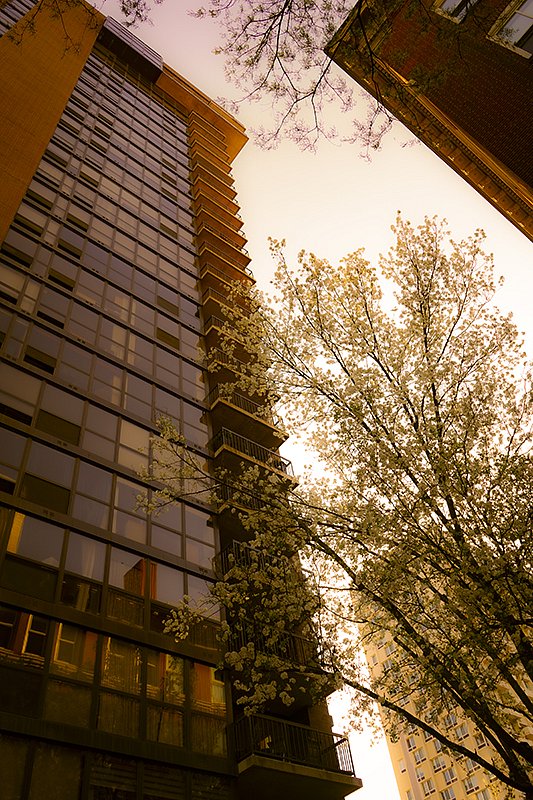
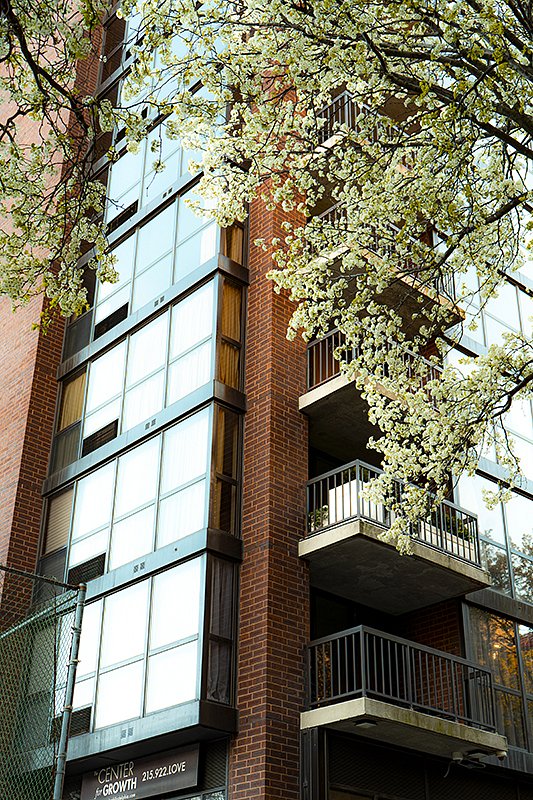
Flowers outside apartement

Love is like wild flowers. It's often found in the most unlikely places -anonymous

bealpha building femalephotographer nature ourphilly philadelphia philly photography sonyalpha urbanstrretphotography visitphilly whyilovephilly

See more in apartment, buiding, flower, spring

Share
Content Published April 26, 2021

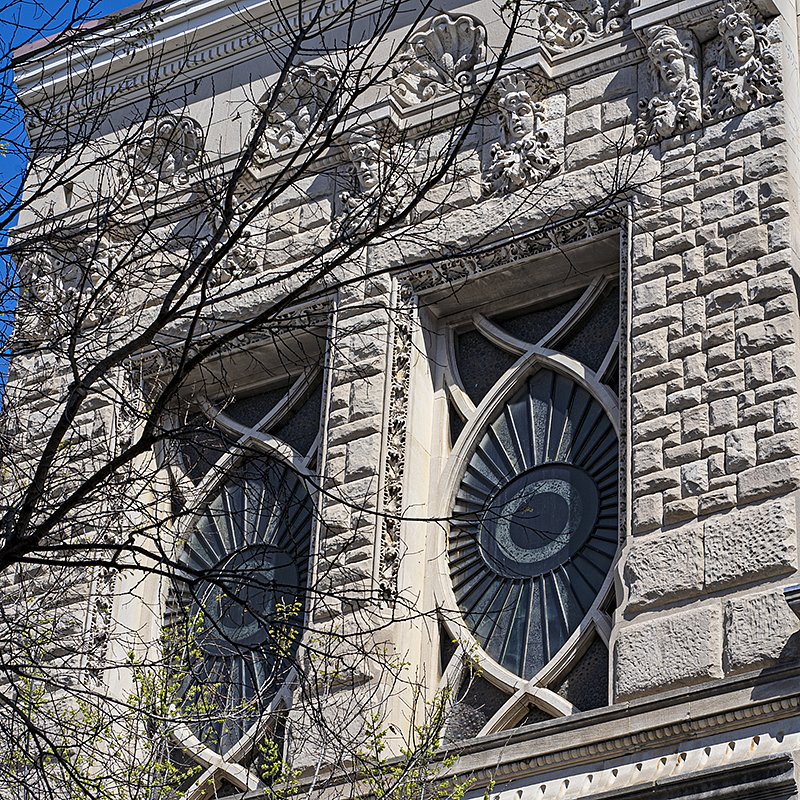
It has eyes

It's less what the eye sees and more what the soul feels

bealpha building femalephotographer ourphilly philadelphia philly photography sonyalpha urbanstrretphotography visitphilly whyilovephilly

See more in "architectural elements", buiding, photography

Share
Content Published April 19, 2021

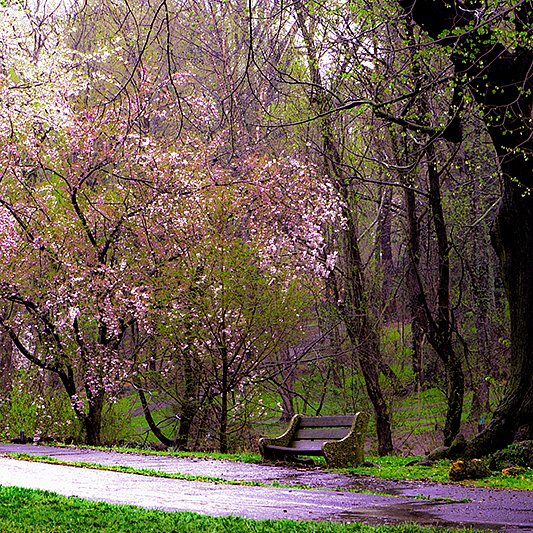
An Empty Bench

Silence is not empty, it is full of answers

bealpha femalephotographer nature outdoor outdoornature park philadelphia philly phillynature photography sonyalpha spring21 visitphilly

See more in cherry blossom, citylife, flower, Out door/ Nature, park, photography, spring

Share
Content Published April 19, 2021

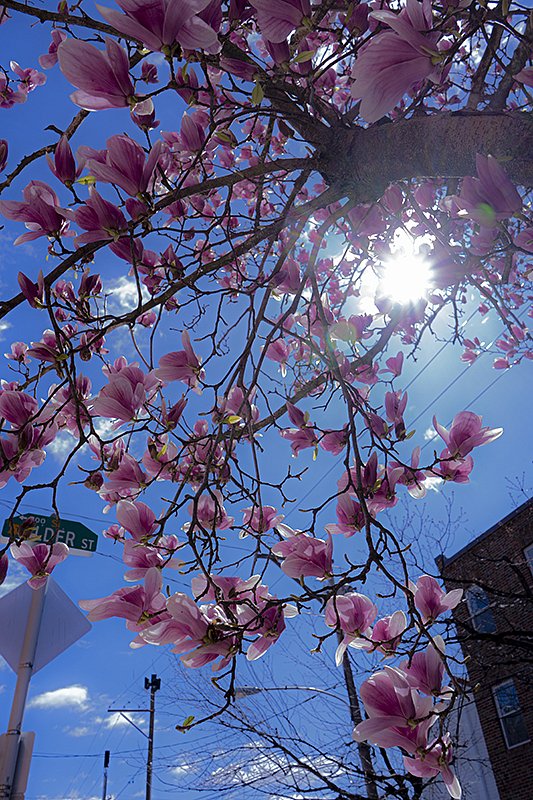
Magnolia in sunny day

Can you really feel the warmth I sent you? The warmth that brings hope, courage and love

The hope for new days of chances and possibilities.

The courage to be a better self, that we owe to ourselves and others

The love is the only thing that made us, was born of, live for and die for...

femalephotographer nature outdoor outdoornature philadelphia philly phillynature photography sonyalpha spring21

See more in flower, photography, spring

Tags
  1. 126

    photography

  2. 116

    philadelphia

  3. 85

    philly

  4. 60

    outdoor

  5. 37

    outdoornature

  6. 30

    building

  7. 26

    park

  8. 25

    nature

  9. 22

    architectural element

  10. 22

    architecture

  11. 17

    femalephotographer

  12. 16

    sonyalpha

  13. 14

    bealpha

  14. 14

    cityhall

  15. 12

    river

  16. 11

    church

  17. 10

    bridge

  18. 9

    water

  19. 7

    independence hall

  20. 7

    reflection

Featured albums
  • Religious Architecture

    The history of architecture is concerned more with religious buildings than with any other type

  • Landmarks & Historial Buildings/ Objects

    As the birth place of USA, Philadelphia is packed with a lot of landmarks and historical buildings/ sites.

  • Philadelphia Corners

    The corners of Philadelphia that we know, see, and pass everyday, We just need to stop for awhile, let them entertain you so we can be grateful for being alive.

  • Architectural sculpturs/objects

    Architectural sculptures or objects/elements, either integrated with the structure or freestanding works, they are part of the original design.

  • Surrounding cities

    The beauties of surrounding cities and counties around Philadelphia.

  • Nature

    Nature is powerful and wise in its silence. It has endless amount of patience and unconditional love. After all, Nature is just simple and source of inspirations

  • Arts

    The expression or application of human creative skill and imagination, typically in a visual form, producing works to be appreciated primarily for their beauty or emotional power.

3 of 6
  1. <
  2. 1 2 3 4 5 6
  3. >
Tweet
  • Home
  • Timeline
  • Albums
  • Contact Us/ Order
  • Comments
  • About me
  • Tags
  • Leave Comment
© 2018